
How to Cool Your Greenhouse in The Summer
Real-Life Methods That Actually Work, Even in Hot Climates
Summer is when most people get nervous about owning a greenhouse.
“Won’t it get too hot?”
“Do you even use it in the summer?”
“Does everything just shut down?”
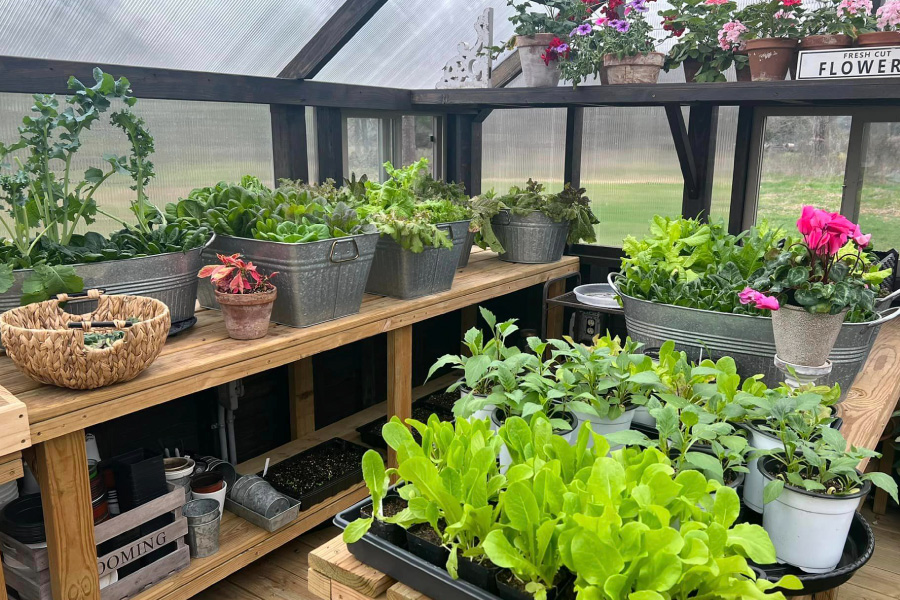
They worry about the heat or assume the structure just shuts down entirely during the warmest months. It is a fair concern, especially in warmer climates, but seasoned owners know that you absolutely can use your greenhouse in the summer. The secret lies in adjusting how you use it. With a few simple changes like adding shade cloth, increasing airflow, and shifting your timing, your greenhouse doesn’t become unusable. It simply becomes seasonal.
Why Greenhouses Get Hot in Summer
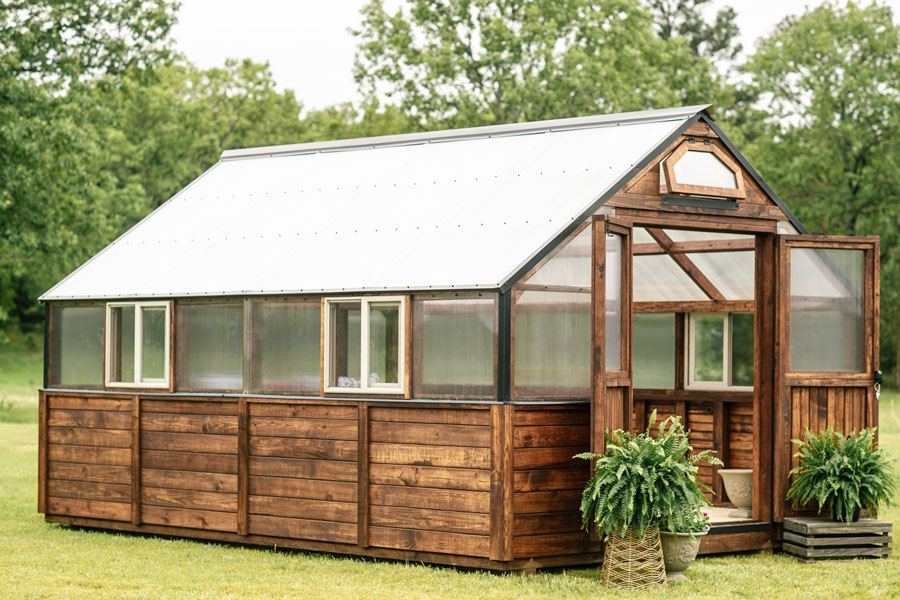
A greenhouse is designed to trap heat. That’s what makes it so effective in cooler months. But in summer, that same design can cause temperatures to rise quickly, especially during the middle of the day.
Without adjustments, heat can build up fast. The key isn’t to fight the greenhouse, it's to manage the environment.
Can You Use a Greenhouse in Summer?
Yes, and many people do.
But it looks a little different than spring.
Instead of full-day use, most greenhouse owners shift to:
- morning gardening
- evening tending
- heat-aware plant selection
The greenhouse becomes a controlled environment, helping you manage conditions instead of battling peak heat.
Shade Cloth: The Most Effective Cooling Tool
If there’s one tool that makes the biggest difference in summer, it’s shade cloth.
Shade cloth works by:
- reducing direct sun intensity
- lowering internal temperatures
- protecting plants from stress
When installed properly, it can drop greenhouse temperatures by 10–15°F or more.
What Percentage Shade Cloth Should You Use?
This is one of the most important decisions. In hotter climates, lighter shade levels often aren’t enough.
Common options:
- 30–40% → mild climates
- 50% → general use
- 60%+ → high heat environments
I personally use a 70% Aluminet shade cloth, and I use my greenhouse all summer long. That higher percentage makes a noticeable difference in temperature and plant comfort during the hottest parts of the season.
Where to Get Shade Cloth
If you’re looking for quality options, I’ve had great experience sourcing shade cloth from Greenhouse Megastore.
They offer different percentages and materials, including Aluminet, which reflects heat especially well.
Where Should Shade Cloth Go?
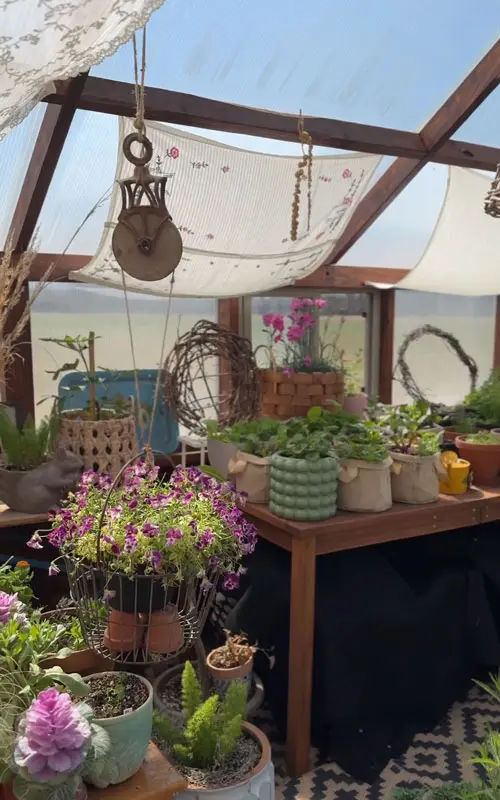
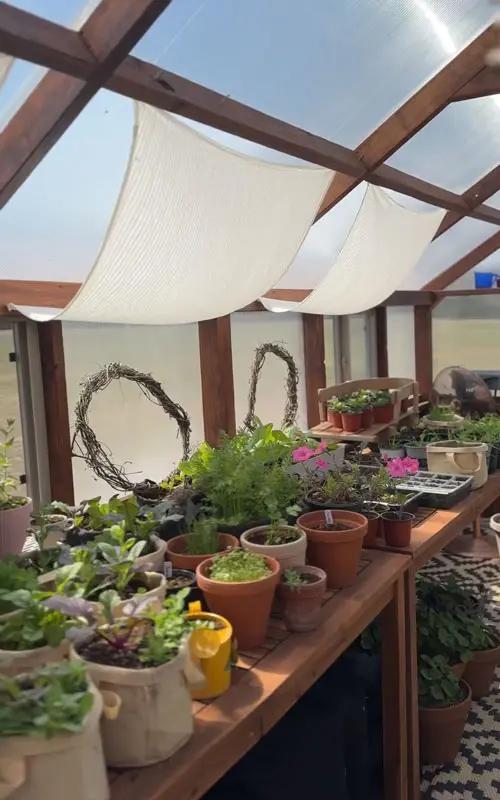
For best results, install it on the outside (top) of the greenhouse
Why this matters:
- blocks heat before it enters
- more effective than interior shading
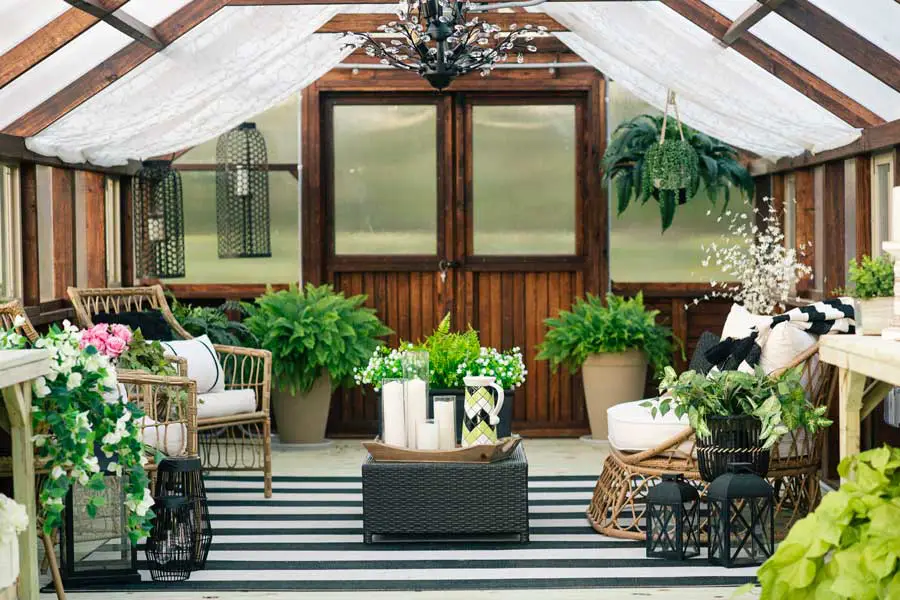
Inside placement can certainly help, but exterior is significantly better. And, some people do both using fabrics inside as “shade” cloths.
Ventilation and Airflow (Just as Important)
Shade cloth alone isn’t enough. Air movement is critical.
Key strategies:
- open windows and doors
- use auto vents and exhaust fans
- add fans if needed
Airflow helps:
 remove trapped heat
reduce humidity
strengthen plants
Watering Strategy in Summer
Because plants in a greenhouse dry out faster than outdoor plants, heat increases water demand quickly.
Best approach:
- water consistently
- monitor soil moisture daily
- avoid letting plants fully dry out
In the summer, watering becomes part of your rhythm.
Adjusting Your Growing Routine
One of the simplest and most effective shifts is timing.
Instead of midday:
garden in the morning
check plants in the evening
This avoids peak heat and makes the greenhouse much more enjoyable to use.
A Real-Life Summer Greenhouse Routine
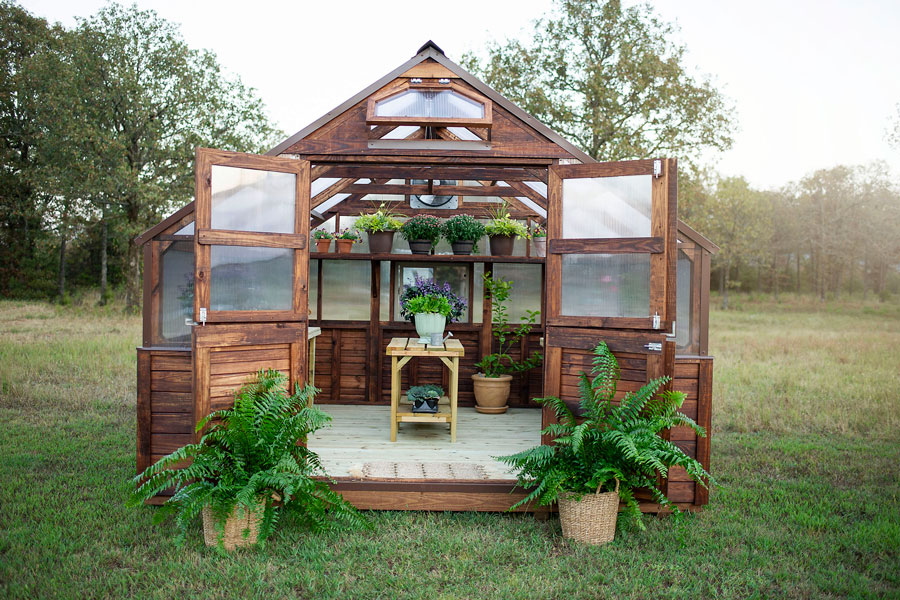
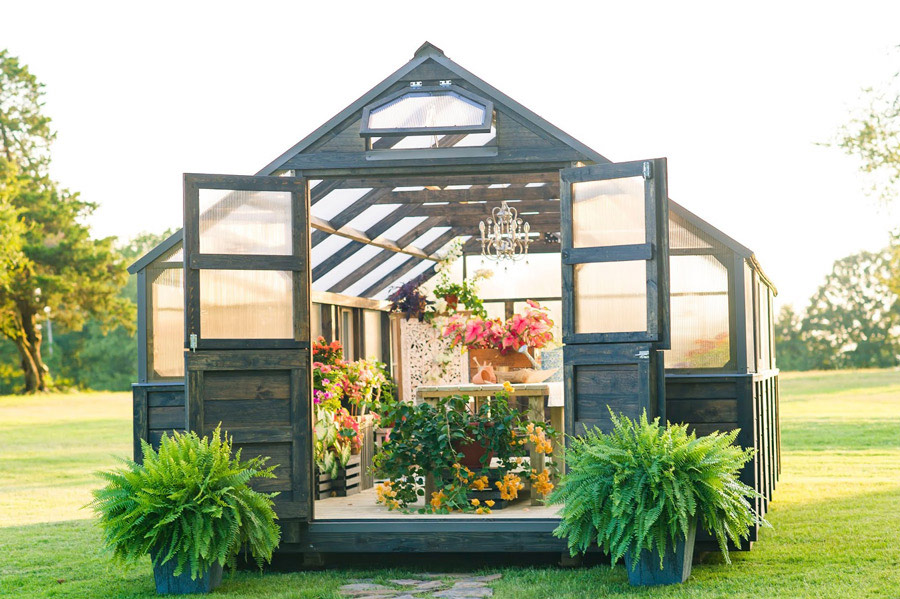
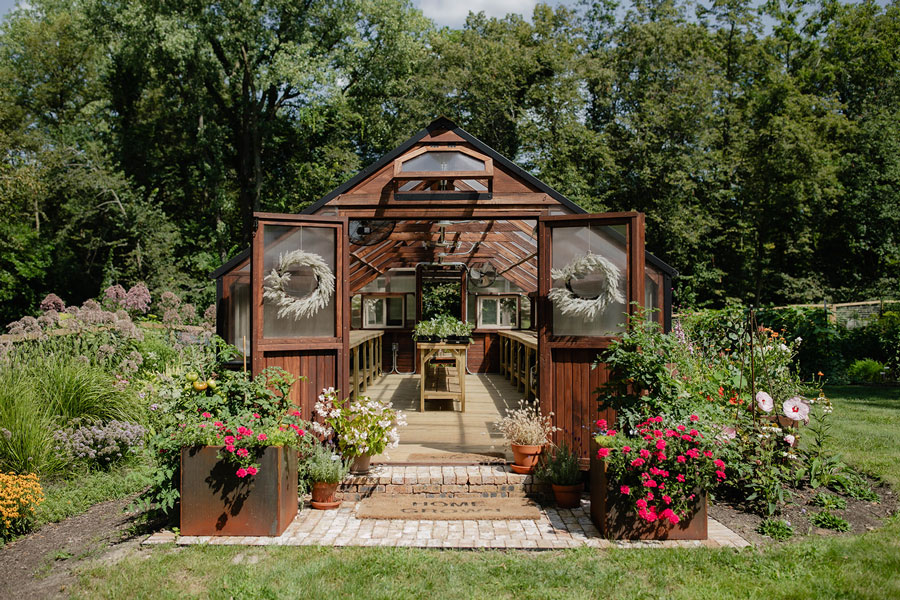
In the peak of summer, my greenhouse looks different than it does in spring.
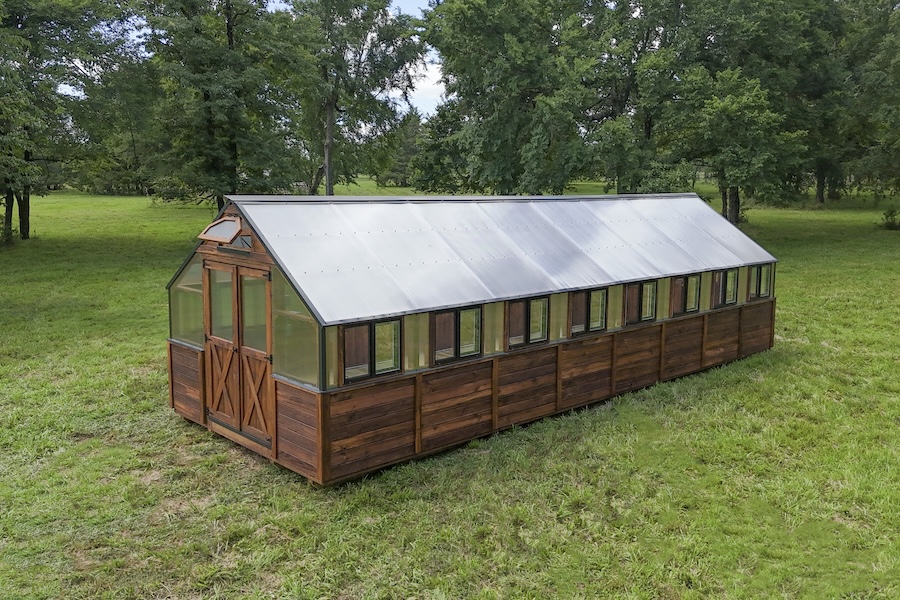
The shade cloth is up.
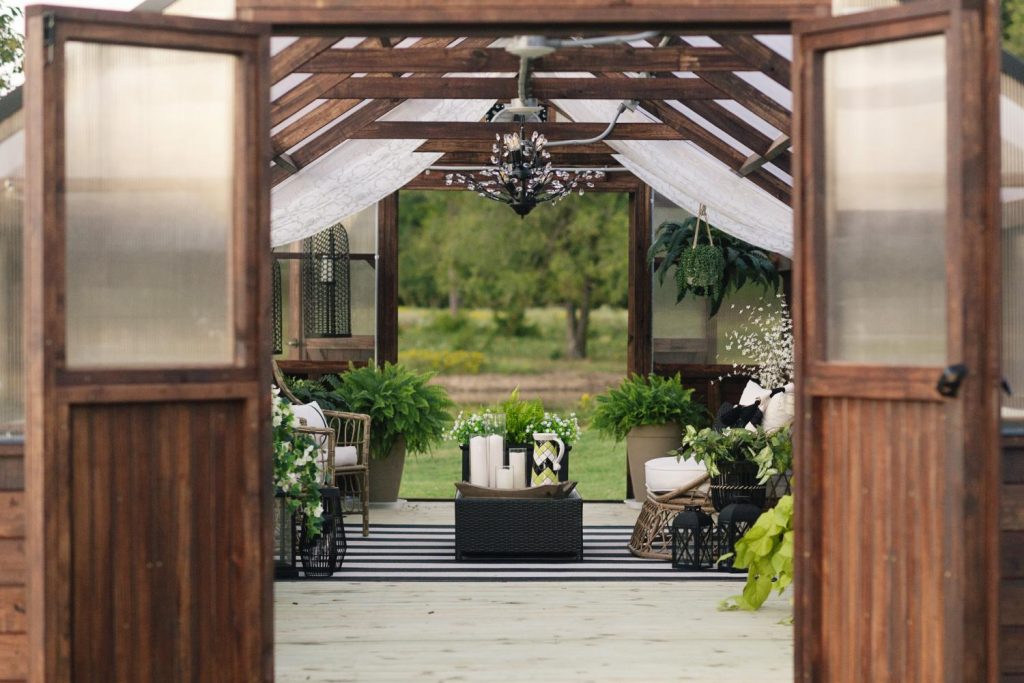
The doors are open.
Air is moving through.
I spend time out there in the mornings — watering, checking plants, making small adjustments.
And again in the evenings, when the temperature drops.
It’s quieter.
More intentional.
And still very much in use.
That’s the part many people don’t realize.
You don’t stop using your greenhouse.
You just learn how to use it differently.
My greenhouse literally saves some of my summer plants, including my geraniums as I typically move them from my patio back to my greenhouse in July. I also grow my okra inside my greenhouse and it thrives! It’s the only way we can grow it and keep it from the deer. A greenhouse truly changes your gardening in the best of ways.
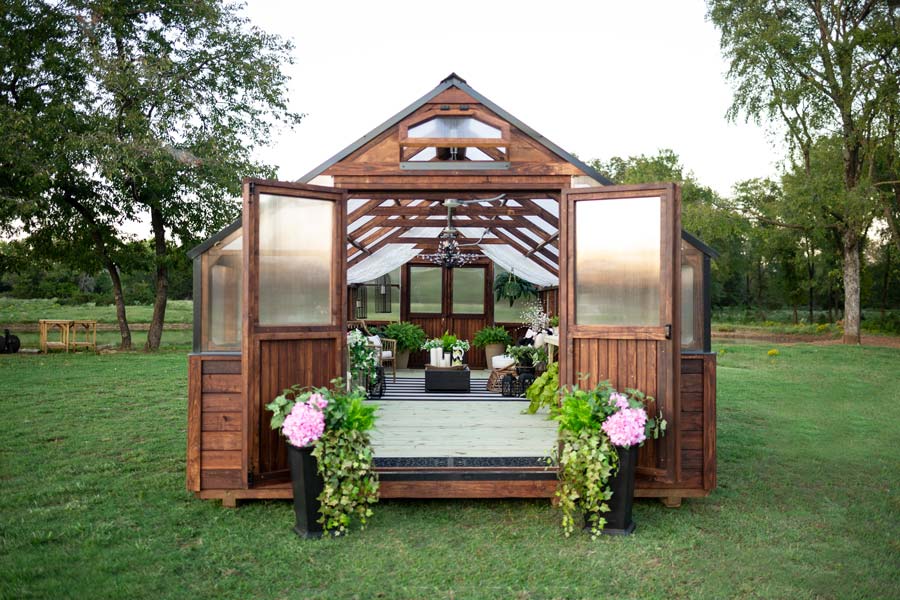
In the peak of summer, my greenhouse looks quite different than it does in spring. The shade cloth is up, the doors are open, and there is a constant flow of air moving through the structure. My routine shifts to the quieter, cooler hours of the mornings and evenings for watering and making small adjustments. While it might look different from the outside, it is still very much in use. That is the part many people don't realize: you don't stop using your greenhouse in the heat, you just learn how to use it differently.
In fact, the greenhouse actually saves many of my summer plants. In July, I typically move my geraniums from the patio back inside to protect them, and I grow my okra there as well. It thrives in the controlled environment, and it is the only way I can keep the crop safe from the local deer. By providing a protected space even during the hottest months, a greenhouse truly changes your gardening in the best of ways.
Growth Through Every Season
Cooling a greenhouse in summer isn’t complicated; it’s just intentional. With shade cloth, airflow, and a simple shift in routine, your greenhouse remains usable—even in the heat. And once you experience that, you realize something important: a greenhouse isn’t just for one season. It’s a space you learn to use all year long.