
Polycarbonate vs. Glass Greenhouses
Why Yoderbilt’s Twin-Wall Polycarbonate is the Superior Choice
When it comes to choosing the right greenhouse, one of the most important decisions you'll make is what material covers your structure. Traditionally, many people think of glass greenhouses as the gold standard. But in today’s climate—and with the rise of smarter, more durable materials—high-grade polycarbonate greenhouses, like those from Yoderbilt, are quickly becoming the preferred option among serious gardeners, hobbyists, and even commercial growers.
In this blog post, we’ll explore the key differences between glass greenhouses and polycarbonate greenhouses, including light transmission, insulation, durability, safety, and overall long-term value. By the end, you’ll see why a Yoderbilt Greenhouse with 8mm twin-wall polycarbonate is not only the smarter choice—but the one designed to truly grow with you, season after season.
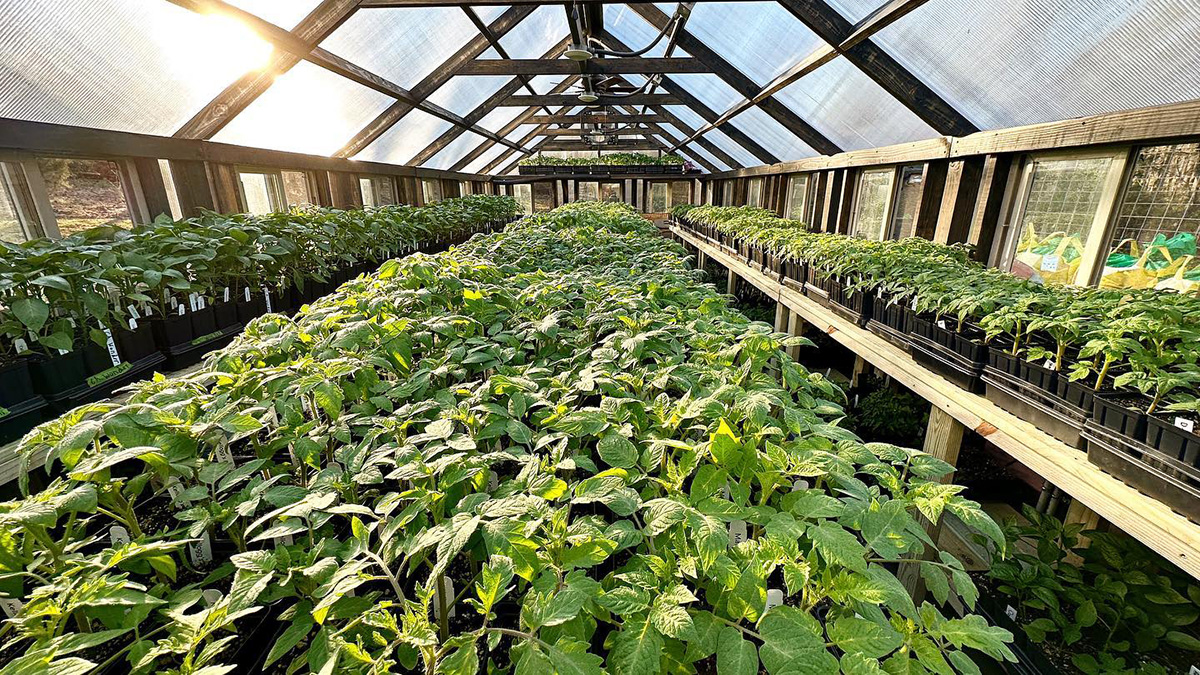
Light Transmission: Even, Diffused Light vs. Direct Glare
Glass Greenhouses
Glass is known for its clarity, which allows for maximum light transmission—typically around 90%. However, it also means plants are exposed to harsh, direct sunlight, which can lead to hot spots, sun scald, and uneven growth patterns, especially in hotter climates.
Polycarbonate Greenhouses (Yoderbilt)
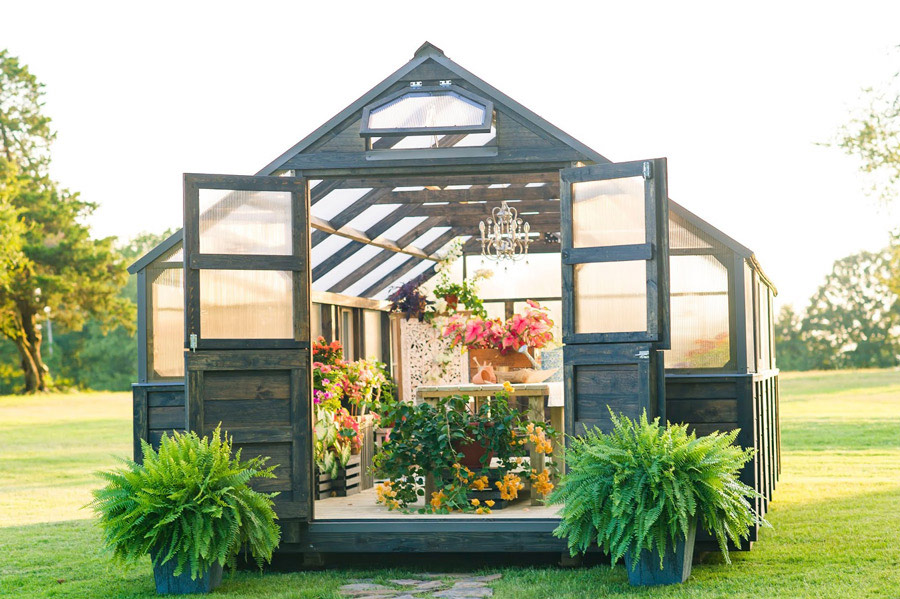
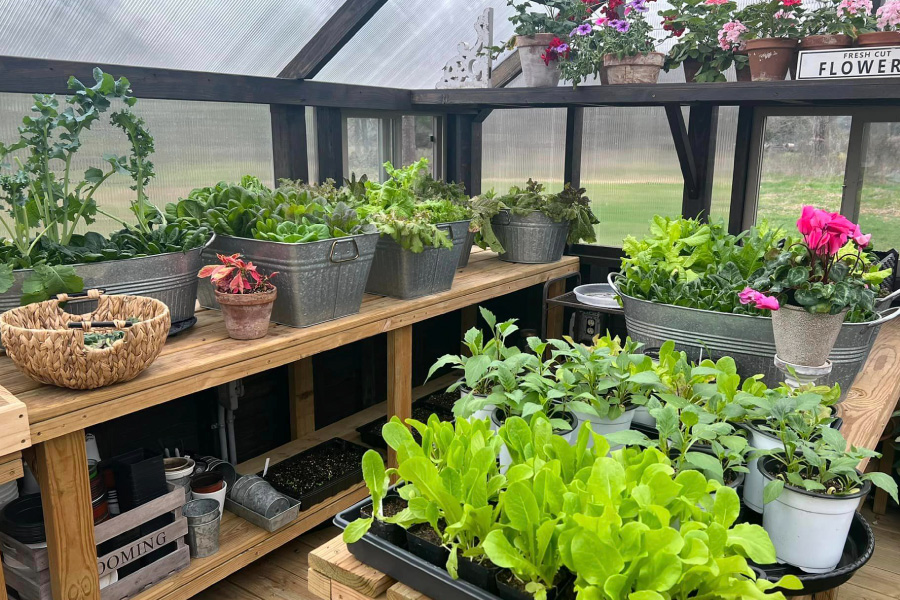
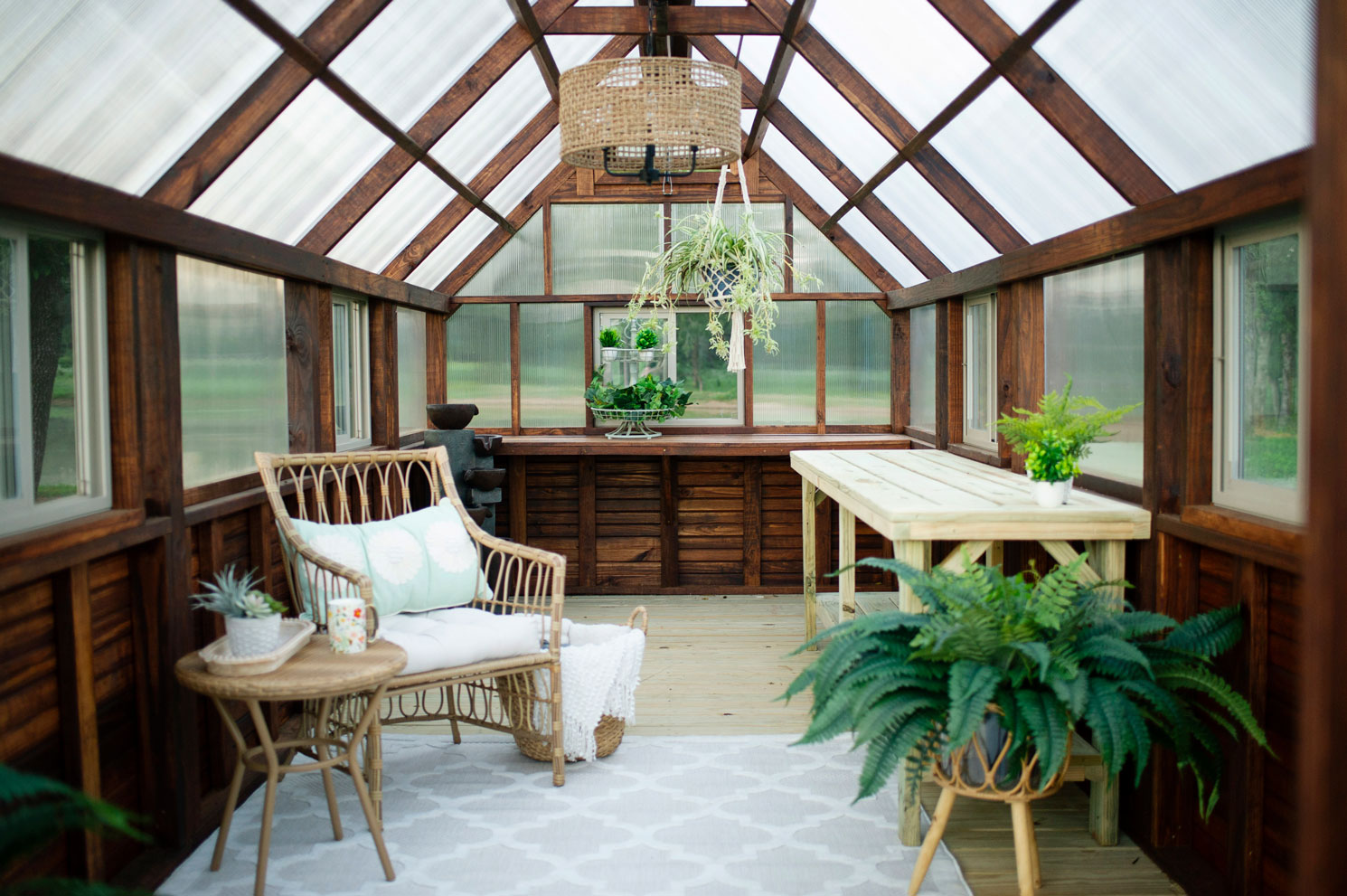
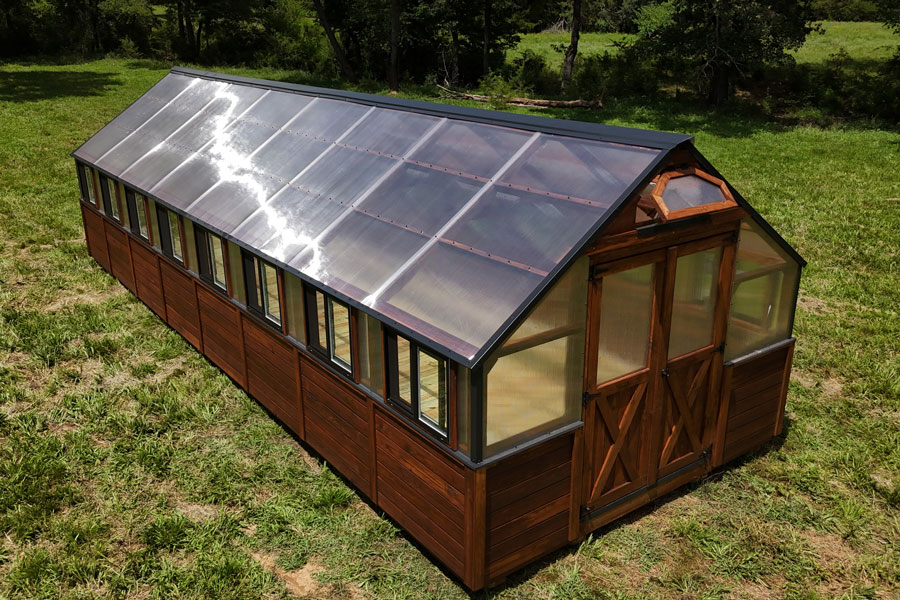
Yoderbilt uses 8mm twin-wall polycarbonate, which transmits about 80-85% of natural light but does so evenly and diffusely. The twin-wall structure refracts light as it enters, creating a softer, more consistent glow inside the greenhouse. This helps prevent burning and promotes more uniform plant development—something that’s scientifically proven to increase photosynthetic efficiency and reduce plant stress.
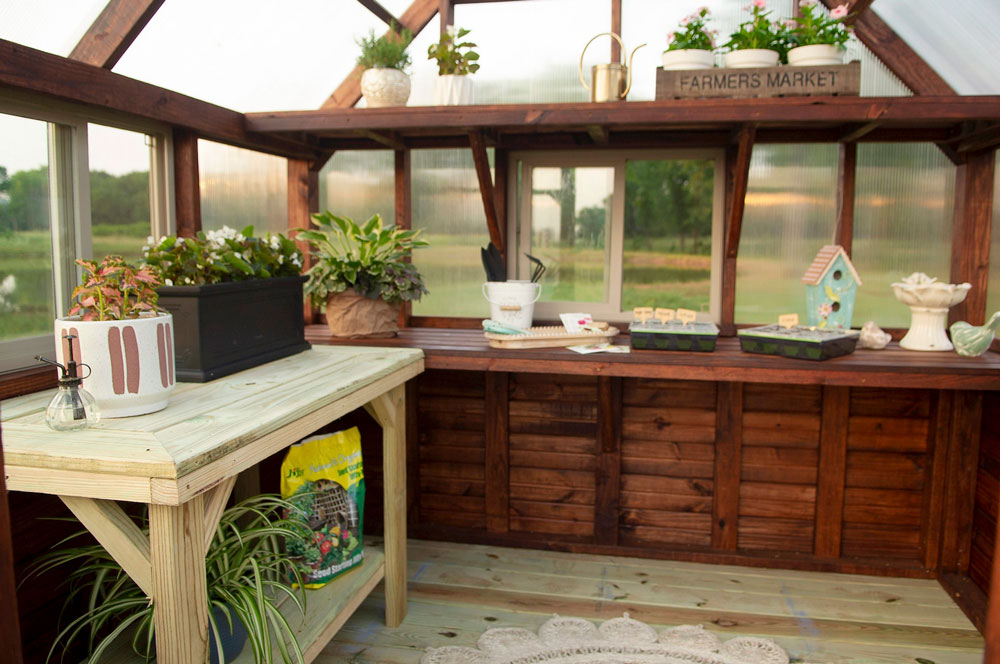
Insulation & Energy Efficiency: Polycarbonate Keeps the Heat In
Glass Greenhouses
Single-pane glass has low insulating properties, with an R-value (a measure of insulation) around 0.9. This means it allows heat to escape easily, making it harder to maintain optimal growing temperatures in cold weather. Heating costs for a glass greenhouse can be significantly higher—especially in four-season climates.
Polycarbonate Greenhouses (Yoderbilt)
Yoderbilt’s twin-wall polycarbonate has an R-value of approximately 1.7, nearly double that of glass. The air gap between the polycarbonate layers acts as natural insulation, helping retain warmth during the winter months and keeping the interior cooler during the summer. This not only protects your plants from temperature extremes but can also lead to lower heating and cooling costs over time.
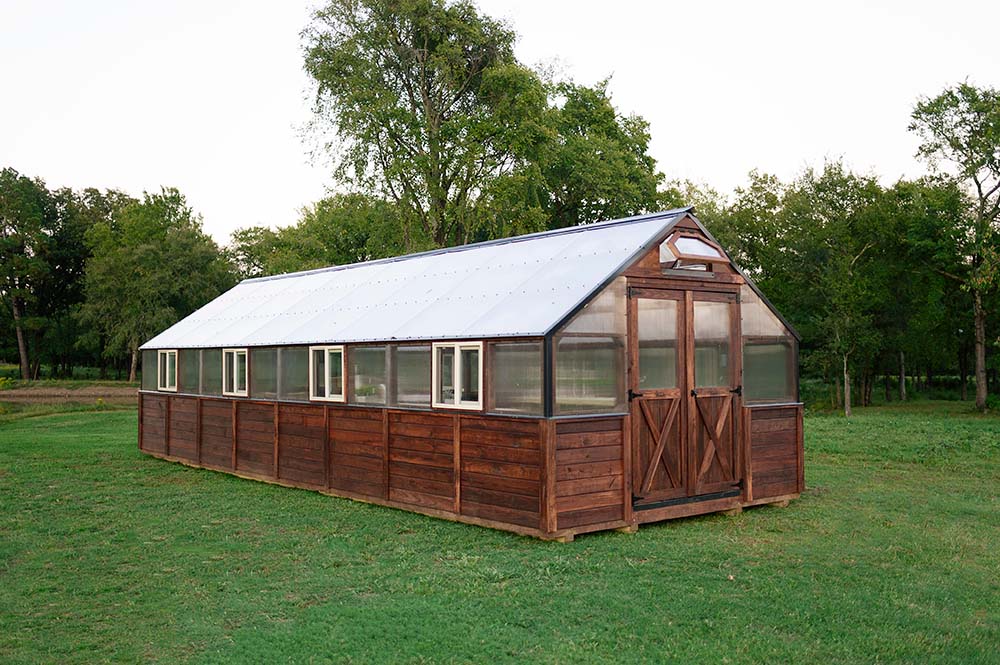
Durability and Weather Resistance: Built to Withstand Storms
Glass Greenhouses
Glass is heavy and fragile. It can easily break under pressure from hail, falling branches, or high winds. Replacement panes are expensive, and structural damage can be dangerous.
Polycarbonate Greenhouses (Yoderbilt)
Yoderbilt’s 8mm twin-wall polycarbonate is designed to be impact-resistant and highly durable under typical gardening conditions. It’s built to handle hail, wind, and even severe weather with impressive resilience. Many of our customers—from hurricane-prone regions to the stormy plains of Kansas—have shared stories of their Yoderbilt greenhouse standing strong, even when other structures nearby sustained damage. While no material is entirely weatherproof, we’ve been encouraged by the real-world performance our customers have experienced.
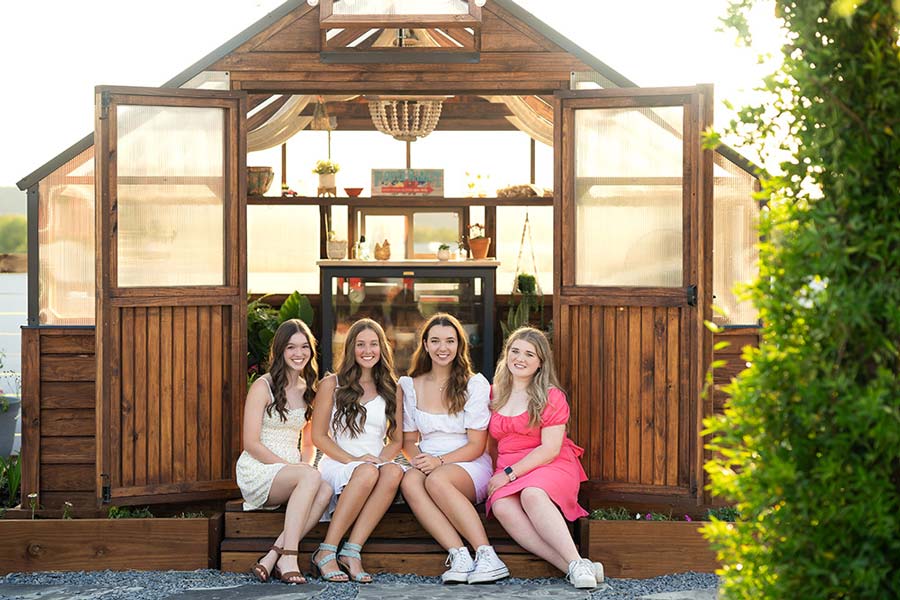
Safety: A Safer Solution for Families and Pets
Glass Greenhouses
Broken glass poses a serious hazard, especially in households with children or pets. One accident can lead to dangerous cuts or injuries.
Polycarbonate Greenhouses (Yoderbilt)
Polycarbonate is a safer alternative, with no risk of shattering into sharp pieces. Even under stress, it may crack but will not splinter, making it the ideal material for family-friendly gardens and backyard greenhouses used daily.
Weight & Installation: Polycarbonate Is Easier to Work With
Glass Greenhouses
Glass is heavy and difficult to install. It often requires specialized framing and professional labor, increasing setup costs and complexity.
Polycarbonate Greenhouses (Yoderbilt)
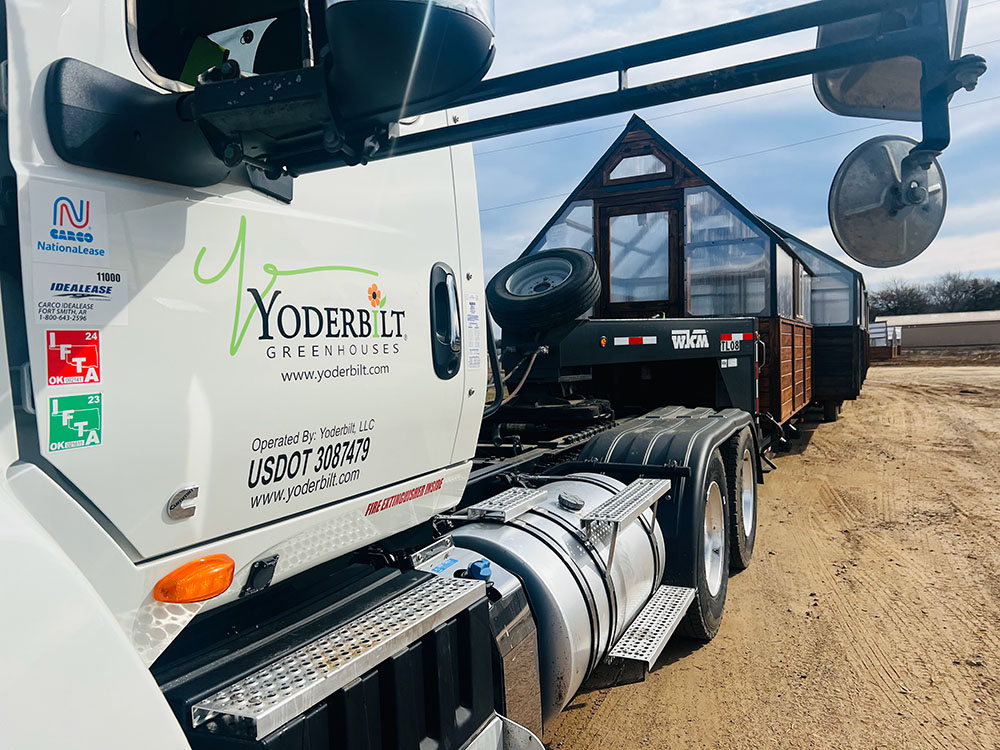
Our polycarbonate panels are lightweight yet strong, making them easier to install securely into a framed greenhouse—without compromising strength. And the best part? Yoderbilt delivers every greenhouse fully assembled, ready to use. No guesswork. No hours of installation. Just place, plant, and enjoy.
Longevity and UV Protection: Built to Last
Glass Greenhouses
Glass can degrade over time, particularly in areas with constant UV exposure. It can also become cloudy, stained, or etched by hard water and acid rain.
Polycarbonate Greenhouses (Yoderbilt)
Yoderbilt’s polycarbonate panels are UV-treated to resist yellowing, cracking, or becoming brittle over time. They’re designed for years of outdoor exposure without losing strength or clarity—ensuring your greenhouse performs season after season.
Value Over Time: A Smarter Long-Term Investment
When comparing upfront costs, some may assume glass is more premium. But when you factor in the long-term savings in heating, repairs, replacements, and plant protection, polycarbonate becomes the clear winner. And with Yoderbilt, you're not just getting polycarbonate panels—you're getting a fully assembled, expertly built structure designed for performance, peace of mind, and beauty.
In today’s world, smart gardeners are looking for durability, performance, safety, and ease—and that’s exactly what a Yoderbilt Greenhouse delivers. With our 8mm twin-wall polycarbonate panels, you get better insulation, safer structure, and proven plant-growing benefits that glass simply can’t offer.
And because Yoderbilt is family-owned, customer-focused, and offers fully assembled delivery), the entire experience—from order to harvest—is seamless. No kits. No confusion. Just a beautiful, durable greenhouse that’s ready to work as hard as you do.
If you're comparing greenhouses and want something that truly lasts, choose Yoderbilt—and experience the next level of greenhouse gardening.
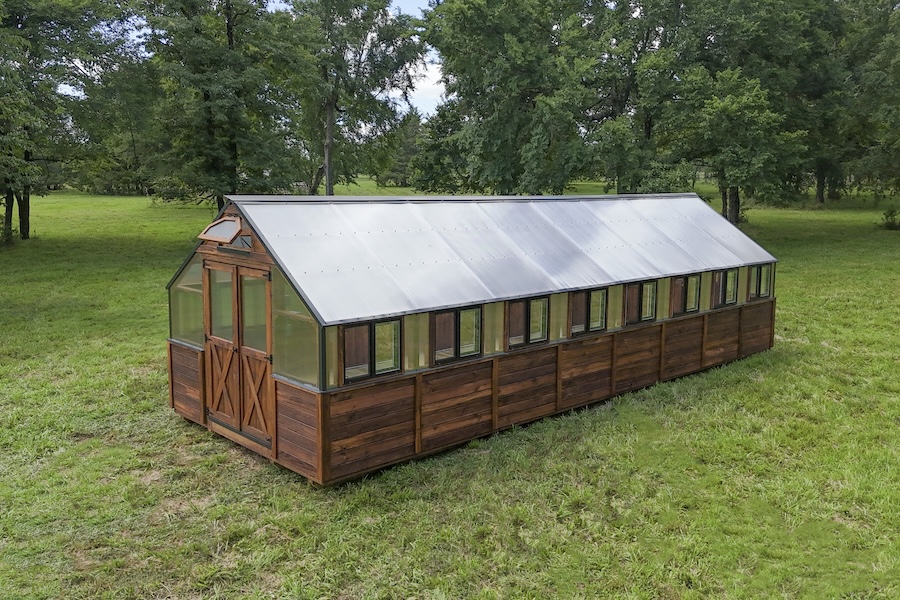

[…] Q: Is polycarbonate glazing good for a commercial greenhouse?A: Yes. Modern twin-wall polycarbonate panels provide strong insulation, light diffusion, impact resistance, and cost savings. Many commercial growers choose polycarbonate when insulation and longevity are key, especially in colder or risk-exposed climates. […]