How to Heat a Greenhouse in Winter (Simple, Efficient Ways That Work)
How do you heat a greenhouse in winter? How warm does a greenhouse need to be? Can you use an unheated greenhouse? And will you need to run a heater all winter?
The answer depends on where you live and, most importantly, what you want to grow.
A greenhouse filled with cold-hardy lettuce, spinach, and kale has very different heating requirements than one filled with tender plants or warm-season vegetables.
That's why successful winter greenhouse gardening doesn't begin with choosing a heater. It begins with deciding how warm your greenhouse actually needs to be, reducing unnecessary heat loss, and then adding supplemental heat when your plants require it.
Sometimes the most efficient way to heat a greenhouse isn't producing more heat.
It's keeping more of the heat you already have.

Do You Need to Heat a Greenhouse in Winter?
Not always.
Whether your greenhouse needs supplemental heat depends on three primary factors:
- Your climate and outdoor temperatures
- What you're growing
- The minimum temperature you want to maintain
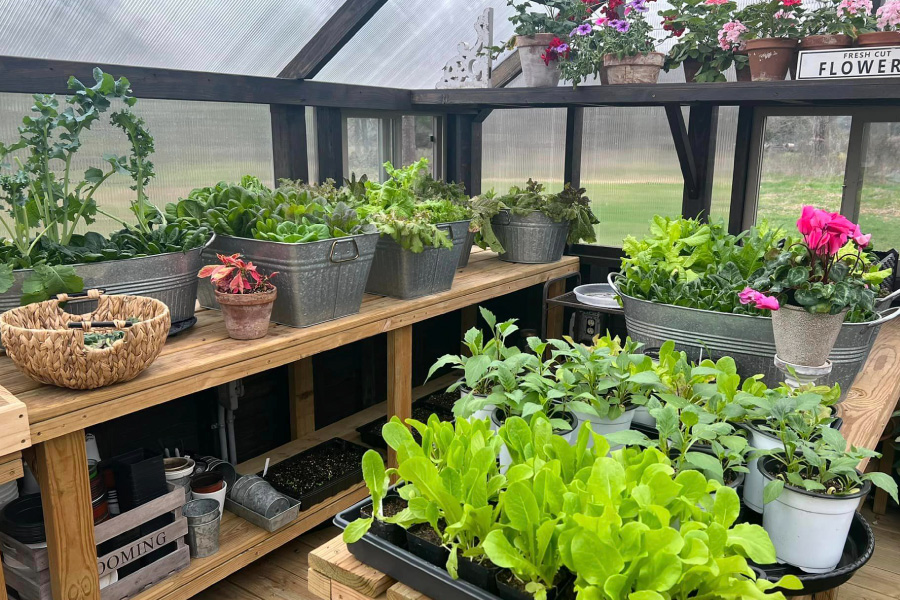
Many cool-season vegetables tolerate much colder conditions than warm-season plants. Lettuce, spinach, kale, arugula, radishes, and many herbs can be excellent choices for a winter greenhouse because they don't require summer-like temperatures to grow.
Other gardeners may be overwintering tender plants, starting seeds early, or trying to maintain warmer growing conditions throughout winter. That's possible, too. It simply requires more supplemental heat.
There isn't one perfect greenhouse temperature for winter.
You don't heat a greenhouse to a universal temperature. You heat it for what you're trying to grow.
How Much Warmer Is a Greenhouse Than Outside in Winter?
A greenhouse can become considerably warmer than the outdoor air on a sunny winter day. Solar energy enters through the greenhouse panels and warms the plants, floor, soil, containers, and other materials inside.
But that doesn't mean an unheated greenhouse stays warm all night.
After sunset, the greenhouse begins losing the heat it collected during the day. How quickly the temperature drops depends on outdoor temperature, wind, cloud cover, greenhouse construction, panel material, insulation, and air leakage.
During prolonged cold weather, an unheated greenhouse may eventually approach outdoor temperatures overnight.
This is why winter greenhouse heating is really about two things: retaining heat and replacing heat.
The more effectively you do the first, the less you'll generally need to do the second.

6 Ways to Heat a Greenhouse in Winter
1. Determine the Temperature Your Plants Actually Need
Before buying a greenhouse heater, decide what you want to accomplish.
Are you trying to prevent freezing, grow cool-season vegetables, overwinter tender plants, or maintain warm growing conditions throughout winter?
Each goal requires a different heating strategy.
If your plants are comfortable at cooler temperatures, maintaining unnecessary warmth wastes energy. If you're growing plants that require higher temperatures, you'll need enough heating capacity to maintain those conditions safely.
A minimum/maximum thermometer or remote temperature sensor is one of the simplest tools you can add to a winter greenhouse. Instead of guessing how cold the greenhouse becomes overnight, you'll know.
2. Underpin the Greenhouse
For greenhouses with raised flooring, don't overlook what is happening underneath the structure.
Cold winter air moving beneath a greenhouse can contribute to heat loss through the floor. Underpinning the greenhouse base helps block that airflow and creates another barrier between your growing space and cold outdoor conditions.
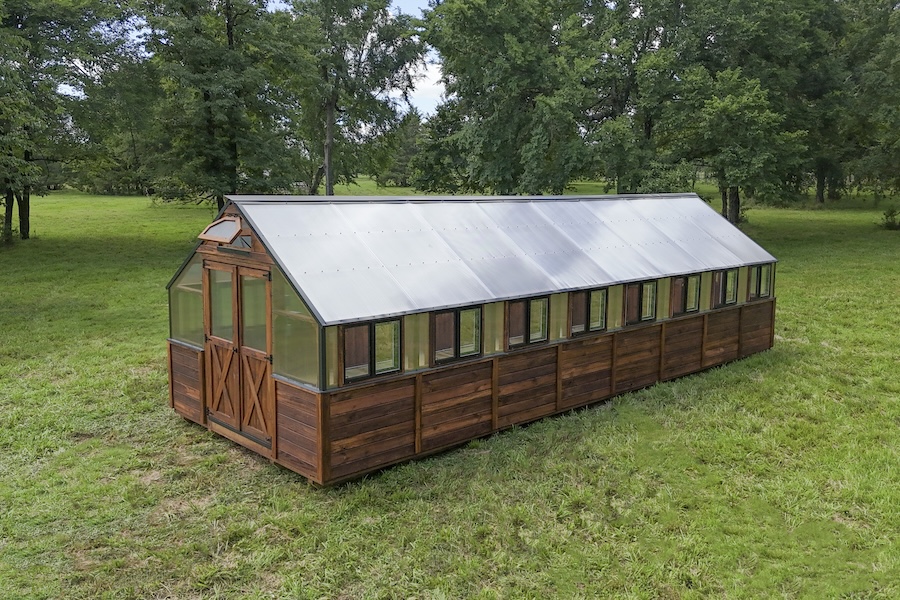
This is particularly relevant for Yoderbilt Greenhouses because our greenhouses include pressure-treated deck-board flooring.
Underpinning may not sound like a heating method, but heating a greenhouse efficiently isn't only about adding a larger heater. It's also about preventing cold air from working against the heat you're already producing.

3. Consider Your Greenhouse Panels and Insulation
Greenhouse construction plays an important role in how effectively a structure retains warmth.
Yoderbilt Greenhouses are constructed with 8mm twin-wall polycarbonate. The space between the layers provides an insulating air pocket that helps reduce heat transfer through the greenhouse walls and roof.
Additional winter insulation may also be useful depending on your climate and growing goals. Some gardeners add insulation to appropriate areas, including the north-facing side where less winter sunlight enters.
Just remember that greenhouse insulation involves a balance. You want to reduce heat loss without unnecessarily blocking the sunlight you're relying on to warm the greenhouse during the day.
4. Use Thermal Mass for Passive Greenhouse Heating
One of the simplest passive greenhouse heating methods is thermal mass.
Water, stone, brick, and other dense materials absorb warmth when sunlight heats the greenhouse during the day and gradually release some of that stored heat as temperatures fall.
Water-filled containers or barrels are particularly popular because water stores a significant amount of heat.
Thermal mass isn't a replacement for supplemental heat during extreme cold. Instead, think of it as another tool for moderating temperature swings and making better use of solar energy.
5. Add Row Covers for Another Layer of Protection
You don't always need to make the entire greenhouse warmer. Sometimes you only need to protect the plants.
Frost cloth and row covers can create a smaller protected area inside the greenhouse, trapping warmth closer to cold-sensitive plants.
It's essentially a greenhouse within your greenhouse.
This can be particularly useful during an unusually cold night when cool-season vegetables need additional protection without dramatically raising the temperature of the entire structure.
6. Use Supplemental Heat When You Need It
When passive heat and heat-retention strategies aren't enough to maintain your desired temperature, supplemental heating becomes important.
For many residential greenhouse owners with appropriate electrical service, an oil-filled radiator heater can provide steady supplemental warmth.
This is one of the heating options we frequently recommend at Yoderbilt. A thermostatically controlled oil-filled radiator allows the greenhouse owner to select a minimum temperature rather than continuously producing maximum heat.
Some gardeners choose to maintain their greenhouse in the 50s. Others growing cold-tolerant crops may allow temperatures to fall much lower. It comes back to what you're growing.
During extreme cold or a power outage, some greenhouse owners also keep an appropriately rated propane heater as a backup heat source.
Any fuel-burning heater requires careful attention to manufacturer instructions, ventilation, clearance requirements, fire safety, and carbon monoxide risk. Never use an outdoor-only or improperly vented heater inside an enclosed greenhouse.
Having a backup plan before severe winter weather arrives is much easier than trying to create one during a power outage.
What Is the Most Efficient Way to Heat a Greenhouse?
There isn't one heater or trick that works for every greenhouse.
For most backyard greenhouse owners, the most efficient approach combines several strategies:
Capture the heat. Allow winter sunlight to naturally warm the greenhouse during the day. (For more information on where to place your greenhouse in your backyard, read our blog post here).
Keep the heat. Reduce drafts, consider insulation, use quality greenhouse materials, and underpin raised structures where appropriate.
Protect the plants. Use row covers or frost cloth when individual crops need additional protection.
Add only the heat you need. Use a thermostatically controlled supplemental heater to maintain the minimum temperature required by your plants.
This approach is usually more practical than trying to force a greenhouse to maintain summer temperatures throughout winter when the plants inside don't require them.
What Can You Grow in a Greenhouse in Winter?
Winter doesn't have to mean the end of your growing season.
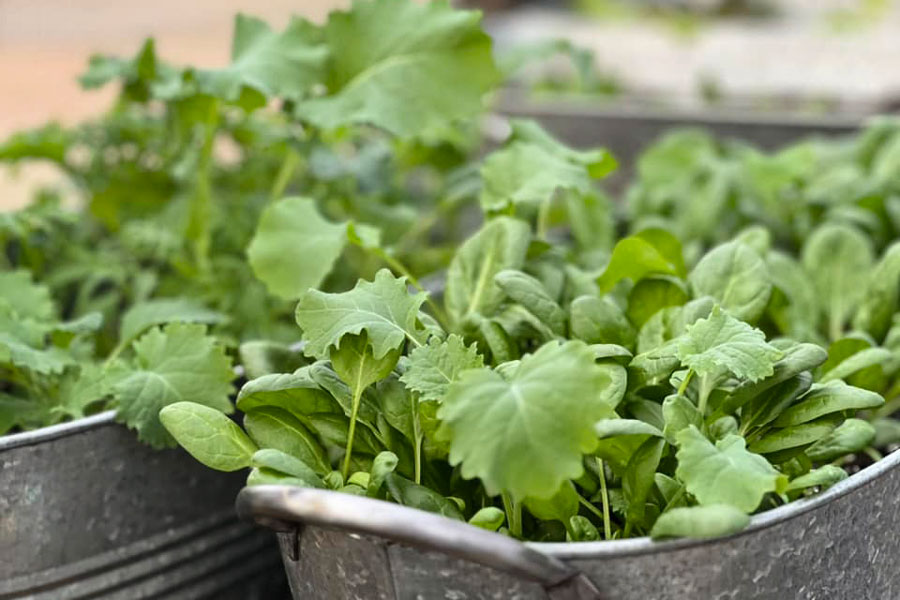
Cold-tolerant crops are often ideal for winter greenhouse gardening, including:
- Lettuce
- Spinach
- Kale
- Arugula
- Radishes
- Swiss chard
- Parsley
- Cilantro
- Green onions
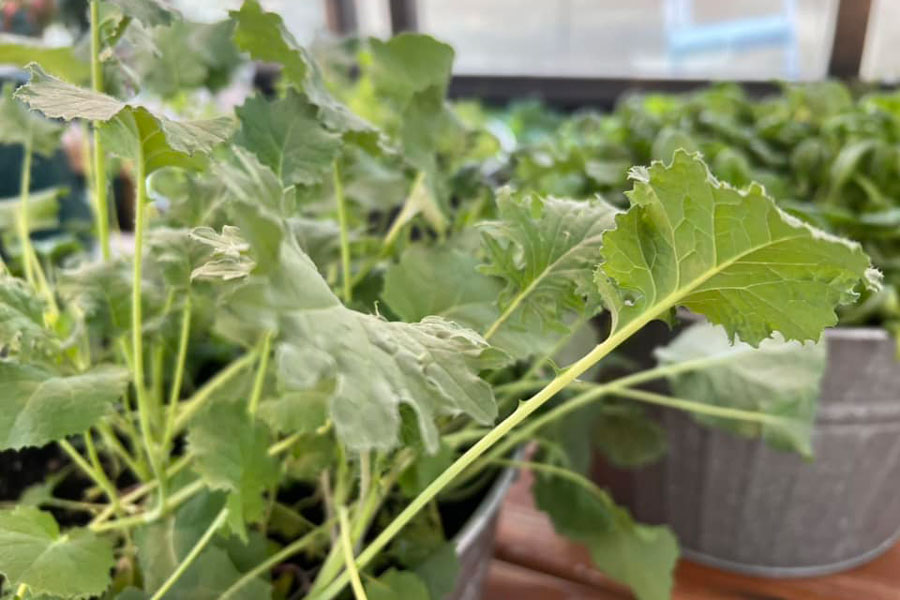
One important distinction is that surviving winter and actively growing throughout winter aren't necessarily the same thing. Shorter days and lower winter light levels can slow plant growth even when the greenhouse remains warm enough for the plants to survive.
And there is something particularly satisfying about opening a greenhouse door in December or January when everything outside seems dormant and finding lettuce, herbs, and fresh green leaves still growing inside.
You don't necessarily need perfect growing conditions.
Sometimes you simply need better conditions than the ones outside.
Make Winter Part of Your Growing Season
Learning how to heat a greenhouse in winter becomes much simpler when you stop thinking of the heater as the entire solution.
Start with what you want to grow. Know the temperatures those plants can tolerate. Capture the warmth winter sunlight gives you. Keep as much of that warmth inside as reasonably possible. Then supplement the heat when you need it.
At Yoderbilt Greenhouses, our greenhouses are handcrafted with 8mm twin-wall polycarbonate, pressure-treated deck-board flooring, ventilation, and features designed for real growing. Because every gardener's climate and growing goals are different, winter greenhouse setups can be customized to match the way you want to use your greenhouse.
And once you step inside on a cold winter morning and find something green still growing, you realize something wonderful:
Your growing season didn't have to end when winter arrived.