
What Is the Best Floor for a Greenhouse? A Guide to Greenhouse Flooring
When you're planning a greenhouse, it's easy to spend hours thinking about everything you'll eventually grow inside it.
Tomatoes. Seedlings. Flowers. Herbs. Maybe even fresh lettuce in January.
The floor probably isn't the first thing that comes to mind.
But once you actually start using a greenhouse, what's under your feet matters more than you might expect.

A good greenhouse floor needs to handle water, dirt, dropped potting soil, heavy pots and plenty of foot traffic. It should make the greenhouse easier to use and maintain—not give you one more gardening problem to solve.
And because there are so many options, from gravel and concrete to pavers, bare ground and wood, one of the most common questions is also one of the simplest:
What is the Best Floor for a Greenhouse?
The answer depends on how you plan to use your greenhouse, your climate, your budget and whether the greenhouse itself already includes a floor.
After years of gardening in my own Yoderbilt Greenhouse, I've learned that the floor isn't just something underneath the greenhouse. It becomes part of how you use the entire space.

What Does a Good Greenhouse Floor Need to Do?
Before choosing a material, think about what actually happens on a greenhouse floor.
You're going to spill water.
You're going to spill soil.
Leaves will fall. Pots will overflow. You'll walk in with muddy shoes. You may roll carts across it, move large containers around and stand on it for long stretches while potting or tending plants.
A good greenhouse floor should provide drainage, stable footing, durability and easy maintenance.
Your growing style matters too. Someone planting directly into the ground has very different flooring needs from someone growing primarily in pots and on gardening tables.
There isn't one material that wins every category.
The goal is to find the greenhouse flooring that works best for the way you garden.

Is Gravel a Good Greenhouse Floor?
Gravel is one of the most common greenhouse flooring choices, and it's easy to understand why.
It's relatively affordable, allows water to drain through it and can be installed without pouring a permanent slab. For a greenhouse that doesn't include its own floor, gravel can be a practical option.
There are tradeoffs.
Loose gravel can shift underfoot, particularly in high-traffic areas. Small stones can migrate, and rolling carts, stools or other wheeled equipment across gravel isn't always easy. How comfortable it feels depends greatly on the type of stone and how well the base was prepared.
For gardeners who prioritize drainage and affordability, gravel can make sense. Some greenhouse owners also combine materials, using a more solid central walkway with gravel in areas where drainage is particularly important.
That's worth remembering: your entire greenhouse doesn't necessarily have to use the same flooring material.

What About Pavers or Brick?
Pavers are popular with gardeners who want their greenhouse to feel a little more finished.
A brick or paver floor can be beautiful, especially in a greenhouse that's as much a backyard destination as it is a working growing space.
Pavers provide firmer footing than loose gravel and can make it easier to move carts, pots and equipment through the greenhouse. Depending on how they're installed, the joints can also allow some water to move through rather than remaining entirely on the surface.
But the installation underneath them matters.
A beautiful paver floor laid on a poorly prepared base can shift and become uneven over time. Good site preparation still matters, even when the finished surface looks perfect.
I understand the appeal of this option because I want my greenhouse to be functional, but I also want it to feel like a space I enjoy being in.
A greenhouse doesn't have to look purely utilitarian.
For many of us, that's part of the fun.

Is Concrete a Good Greenhouse Floor?
Concrete is durable, stable and easy to sweep. It also creates a smooth surface for carts, stools and other equipment.
The biggest consideration is water.
Unlike gravel, a traditional concrete slab doesn't allow water to simply drain through the surface. Drainage needs to be intentionally planned so irrigation water and spills don't continually collect in low areas.
Concrete is also permanent.
That may be exactly what you want if your greenhouse will remain in the same location for years. But it means you should be confident about the greenhouse location, dimensions and site preparation before the slab is poured.
Concrete can be an excellent greenhouse floor.
It simply isn't automatically the best greenhouse floor because it's the most permanent.
Can You Leave a Greenhouse Floor as Bare Ground?
You can, particularly if your greenhouse is designed for in-ground growing.
Bare soil gives you the obvious advantage of being able to plant directly into the ground, and there's no additional flooring expense.
But it also means accepting some of what comes with an outdoor garden.
Weeds can appear. Water can create muddy areas. Soil gets tracked around, and keeping the greenhouse feeling clean and organized may take more work.
If your vision is a greenhouse filled with in-ground growing beds, bare soil may be completely intentional.
If you're imagining shelves, gardening tables, pots and a clean central aisle, you'll probably want something more stable underfoot.
Again, the best greenhouse floor starts with how you plan to grow.


Don't Forget About Wood Greenhouse Floors
Wood doesn't always get included in greenhouse flooring comparisons, but it deserves to be.
And one of the first questions people understandably ask is: Will a wood greenhouse floor rot?
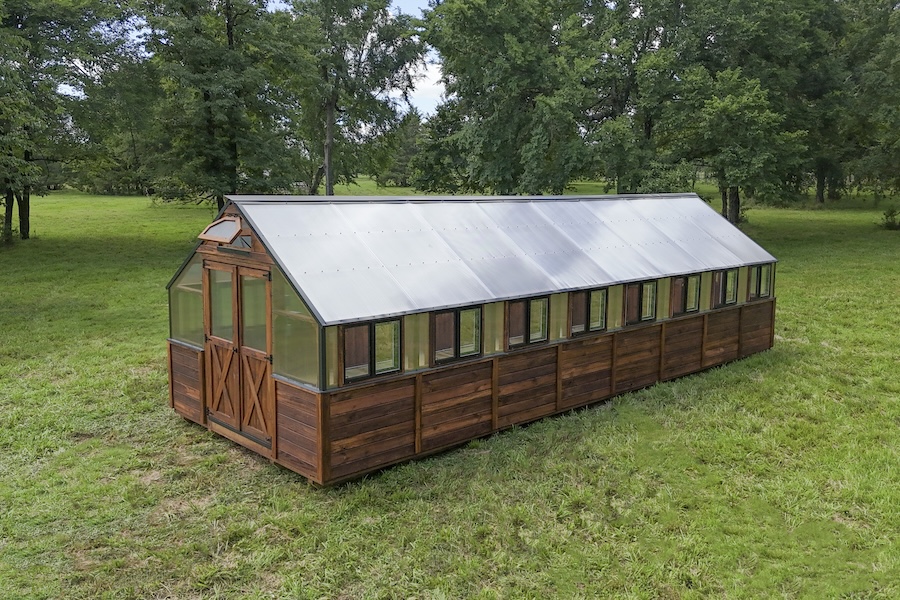
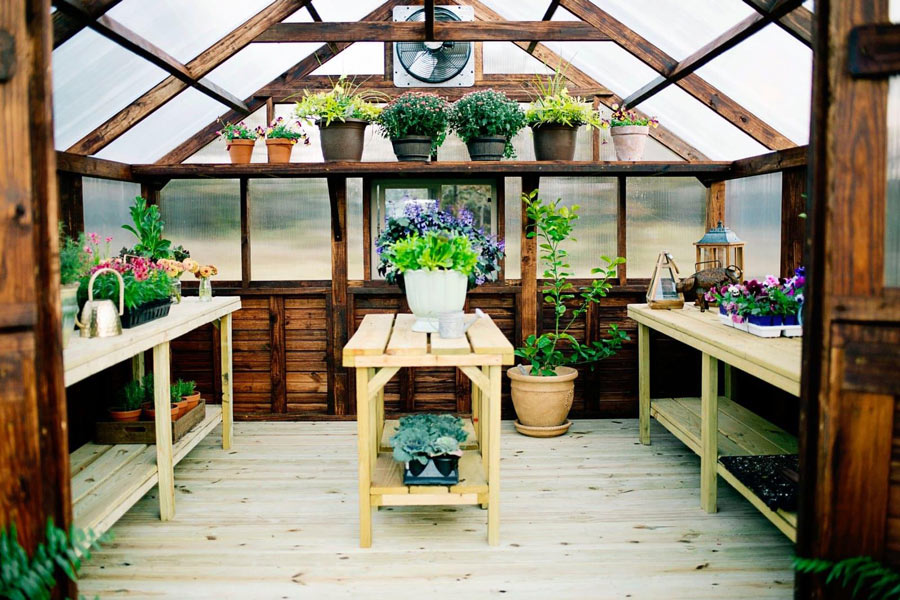
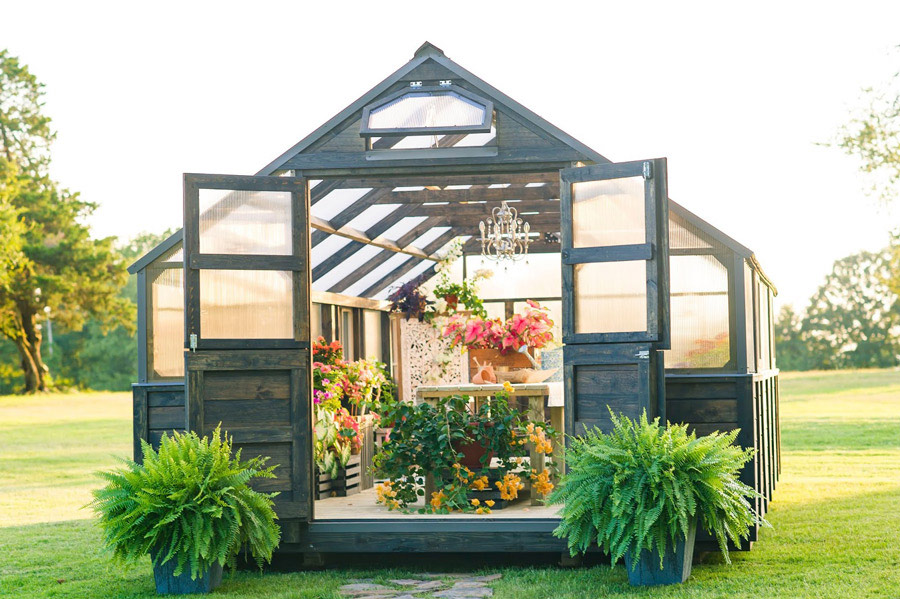
That was something I wondered about too. But after six years of actually gardening on a pressure-treated deck-board floor in my own Yoderbilt Greenhouse, mine still looks as good as it did on day one.
And I am definitely not careful with it.
I'm a messy greenhouse gardener. I spill potting soil. I spill water. Plants get moved around, pots overflow, and when the floor gets dirty, I spray it down to clean it. I use my greenhouse like a working greenhouse—not a showroom.
One of the things I've appreciated most is how quickly the floor dries. Water doesn't sit there pooling on the surface. The small spaces between the deck boards allow water to drain through, much like an outdoor deck, so I can spray the floor clean and let it dry.
That's an important distinction when you're thinking about wood greenhouse flooring. We're not talking about an interior wood floor. Yoderbilt uses pressure-treated deck boards—the same type of material designed for outdoor decks and exposure to the elements.
There is another layer of protection inside the greenhouse as well. The polycarbonate panels filter ultraviolet radiation, which reduces the direct UV exposure the flooring would receive if it were sitting uncovered outdoors. UV exposure is one of the factors that contributes to weathering and fading of outdoor wood, so the greenhouse covering provides additional protection from that exposure.
After six years, I've seen the difference firsthand.
My floor has been watered, sprayed, covered in soil and put through six years of actual greenhouse gardening, and it still looks great.
Beyond durability, I like having a solid surface under my feet. When I'm moving plants, watering, potting or walking out to the greenhouse on a winter morning, I'm not stepping through mud or across shifting gravel.
And because I use my greenhouse as more than a temporary seasonal structure, I like that the floor makes it feel finished.
It's part growing space, part workspace and—if I'm being completely truthful—sometimes part escape.
The floor contributes to that feeling more than you might expect.

Greenhouse Flooring and Drainage Go Hand in Hand
Whatever flooring you choose, don't think about the surface without considering the ground underneath and around your greenhouse.
Water has to go somewhere.
That includes water from your plants as well as rainwater moving around the outside of the structure.
A level, properly prepared greenhouse site with good surrounding drainage gives you a much better starting point than trying to solve water problems after installation.
This is especially important with surfaces such as concrete and pavers. A finished floor can look perfect and still create problems if water has nowhere to go.
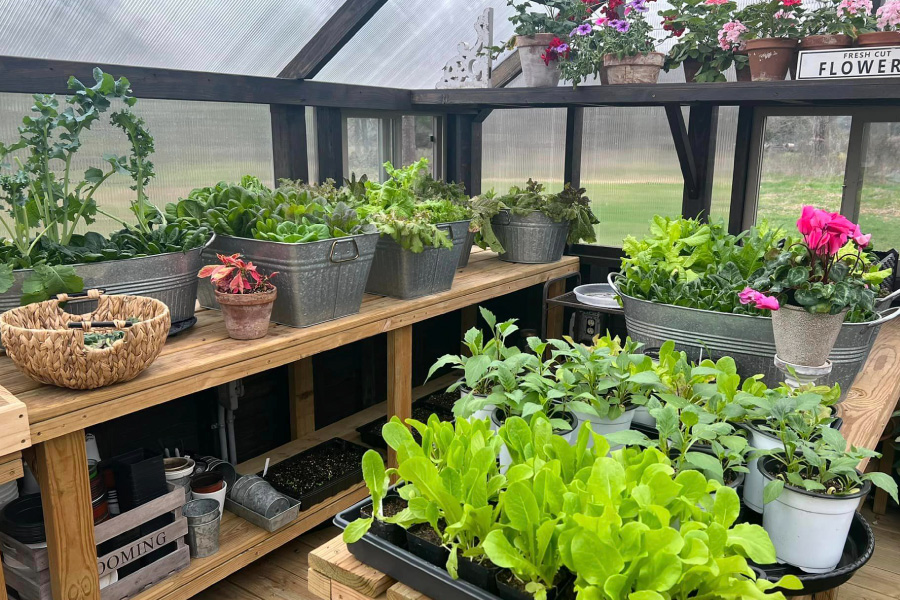
I grow primarily in containers and on tables, so spills are simply part of greenhouse life. I'm watering frequently during certain times of year, moving plants around and occasionally making the kind of mess that comes with actually using a greenhouse.
I want a floor that works with that—not one I'm afraid to get dirty.
Think About Comfort, Not Just Plants
This is something I think greenhouse flooring discussions often overlook.
You're going to be standing on it too.
If you spend hours starting seeds, repotting plants or working at a gardening table, the floor becomes part of your experience.
Think about whether the surface is stable, whether it becomes slippery when wet and how easily you can move through the greenhouse while carrying a large pot.
Accessibility matters as well. If you use a wheeled cart, garden stool, walker or wheelchair—or think you might someday—a firm, level surface can be significantly easier to navigate than loose gravel.
The greenhouse should work for the gardener as well as the plants.
Does Greenhouse Flooring Affect Temperature?
Different greenhouse flooring materials interact with heat differently.
Dense materials such as concrete and masonry can absorb heat when exposed to sunlight and release some of it later as temperatures fall. But flooring alone isn't going to determine whether your greenhouse stays warm in winter or cool in summer.
I wouldn't choose a greenhouse floor based primarily on promises that it will heat or cool your greenhouse.
Temperature management involves the entire greenhouse: sunlight, glazing, ventilation, shade, outside temperatures and, when necessary, supplemental heating or cooling.
Here in Arkansas, I spend far more time thinking about ventilation and summer shade than trying to make my greenhouse floor act like a heating system.
The floor matters—but it's only one piece of the greenhouse environment

So, What Is the Best Flooring for a Greenhouse?
If you're hoping for one answer that applies to every greenhouse, there really isn't one.
Gravel can be an excellent choice when drainage and affordability are priorities. Pavers or brick provide a more finished appearance and stable walking surface. Concrete offers durability and easy cleaning when drainage is properly planned. Bare ground can make sense when you intend to grow directly in the soil.
And a built-in wood floor can provide a finished, stable surface without requiring a separate flooring project after the greenhouse arrives.
The best option depends on the greenhouse you're buying, your site and—most importantly—how you intend to use it.
One Question I'd Ask Before Buying Any Greenhouse
When you're comparing greenhouses, ask this:
Does the greenhouse include a floor?
It's surprisingly easy to overlook.
A greenhouse that appears less expensive initially may require additional site preparation, foundation work or flooring before it's ready to use. That's not necessarily a problem—it simply needs to be part of the comparison.
At Yoderbilt, the floor is already included as a standard feature in both our Legacy and Traditional Greenhouses.
That's one less decision to make and one less project waiting for you after your greenhouse arrives.
And having owned and used my own Yoderbilt for years, I can tell you that the things that seem like small details while you're shopping often become the things you appreciate most once you start using the greenhouse every day.

The Bottom Line
The best greenhouse flooring isn't necessarily the most expensive or elaborate option.
It's the one you don't have to think much about once you start gardening.
It handles water and dirt. It feels stable under your feet. It fits the way you grow. And ideally, it lets you spend less time thinking about what's beneath you and more time thinking about what's growing around you.
That's really the goal with every part of a greenhouse.
Create a space that makes gardening easier—and a place you'll want to keep coming back to.