Ideal Greenhouse Temperature: Complete Guide + Plant Temperature Chart
From winter lettuce to summer tomatoes, here’s your guide to creating the right growing environment in your greenhouse.
It’s a sunny winter afternoon, and the temperature outside is a chilly 45°F. But step inside your greenhouse, and the thermometer may be reading 85°F.
By sunset, that temperature could be dropping quickly.
So, what temperature should you actually keep your greenhouse?
It’s one of the most common questions we hear from greenhouse owners, and the answer might surprise you.
There isn’t one perfect greenhouse temperature for every plant.
Different plants have different temperature preferences, and that’s part of the beauty of greenhouse gardening! Cool-season favorites like lettuce and spinach thrive in cooler conditions, while tomatoes and peppers enjoy a little more warmth.
Understanding these differences helps you choose what to grow throughout the seasons, make the most of your greenhouse, and enjoy fresh harvests for more months of the year.
At Yoderbilt Greenhouses, we believe some of the best gardening knowledge comes from actually getting your hands in the soil. We don’t just build greenhouses. We garden in them, experiment in them, and learn something new with every growing season.
Whether you’re planning your first greenhouse or already harvesting from your own backyard kitchen garden, let’s look at the temperatures your plants actually need.
Before we dive into temperatures, charts, and growing recommendations, I want to share something important: Greenhouse gardening really isn’t complicated, and it should never feel overwhelming. In fact, it’s one of the most enjoyable and rewarding ways to garden!
Like anything new, there’s a little learning along the way. You’ll discover which plants love the cooler months, which ones thrive in summer, and how to make simple adjustments as the seasons change. Before long, you’ll find your own rhythm, develop a feel for what your plants need, and realize just how much you enjoy the process.
And remember, the temperatures we’re sharing in this guide are recommendations, not hard-and-fast rules. Every greenhouse, climate, and growing season is a little different. What works beautifully in my Arkansas greenhouse may look a little different in yours, and that’s perfectly okay! Trust me, I like to push the limits and have found great success in doing so.
You don’t have to get everything perfect to be a successful greenhouse gardener. A little observation, a willingness to experiment, and the joy of watching things grow will teach you more than you might imagine.
What Is the Ideal Greenhouse Temperature?
For many common greenhouse plants, daytime temperatures between 65°F and 80°F provide a useful general starting point, with cooler temperatures overnight. But here’s the important part: that’s a broad guideline, not a temperature you need to maintain every day of the year.
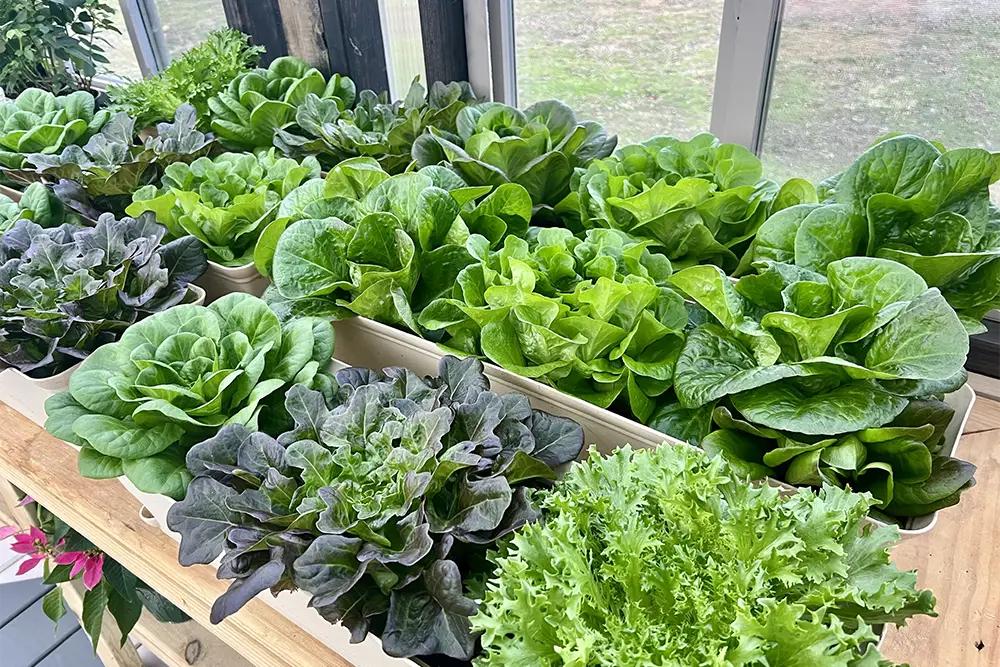
Cool-season vegetables such as lettuce, spinach, kale, and broccoli generally prefer cooler growing conditions.
Warm-season crops such as tomatoes, peppers, and cucumbers need more warmth, particularly when actively growing, flowering, and producing fruit.
Some plants can survive temperatures well outside their preferred growing range. But there’s a big difference between a plant simply surviving and one producing a healthy, abundant harvest.
The secret to successful greenhouse gardening isn’t maintaining one temperature year-round. It’s understanding what the plants you’re growing need during each season.
Greenhouse Temperature Chart: Ideal Temperatures for Common Plants
If you’ve ever wondered whether your greenhouse is too warm for lettuce or too cold for tomatoes, this chart is a great place to start.
These are practical temperature ranges for several popular greenhouse vegetables, herbs, and flowers.
| Plant | Preferred Daytime Temperature | Nighttime Target |
|---|---|---|
| Lettuce | 55–70°F | 45–55°F |
| Spinach | 50–65°F | 40–50°F |
| Kale | 55–70°F | 40–55°F |
| Swiss chard | 60–75°F | 45–55°F |
| Broccoli | 60–70°F | 50–60°F |
| Cabbage | 60–70°F | 50–60°F |
| Tomatoes | 70–80°F | 60–70°F |
| Bell peppers | 70–80°F | 60–65°F |
| Cucumbers | 70–80°F | 60–70°F |
| Basil | 70–80°F | 60–65°F |
| Parsley | 60–70°F | 50–60°F |
| Geraniums | 65–75°F | 50–60°F |
| Pansies | 50–65°F | 40–50°F |
These are approximate planning ranges for established plants, not strict survival limits. Actual requirements vary by variety, plant maturity, sunlight, humidity, and growing conditions. Seed germination temperatures may be considerably different.
One thing we always encourage gardeners to remember is that you don’t necessarily need to maintain every temperature in this chart around the clock. For example, established, cold-hardy greens may tolerate temperatures below their preferred growing range, especially when properly acclimated. Their growth may slow, but they can remain healthy and productive.
Warm-season crops, on the other hand, may experience stress, reduced growth, or poor fruit production when temperatures consistently fall below their preferred range. Of course, you can choose to maintain warmer temperatures in your greenhouse, too! Just keep in mind the preferences of the plants you’re growing and make adjustments as needed. That’s one of the wonderful things about having your own growing space.
That’s why choosing plants that match the season can be one of the smartest decisions a greenhouse gardener makes.
What Temperature Should a Greenhouse Be in Winter?
Winter greenhouse gardening is one of our favorite topics because it opens the door to an entirely different growing season.
While outdoor gardens may be dormant, a greenhouse can still be filled with beautiful, productive plants.
But how warm does your greenhouse actually need to be?
That depends largely on what you’re growing.
If your winter greenhouse is filled with cold-hardy vegetables, you may not need to maintain the same temperatures required for tomatoes or peppers.
In fact, many winter vegetables prefer cool conditions.
The Cool-Season Greenhouse Kitchen Garden
Some of our favorite crops for cooler greenhouse growing include:
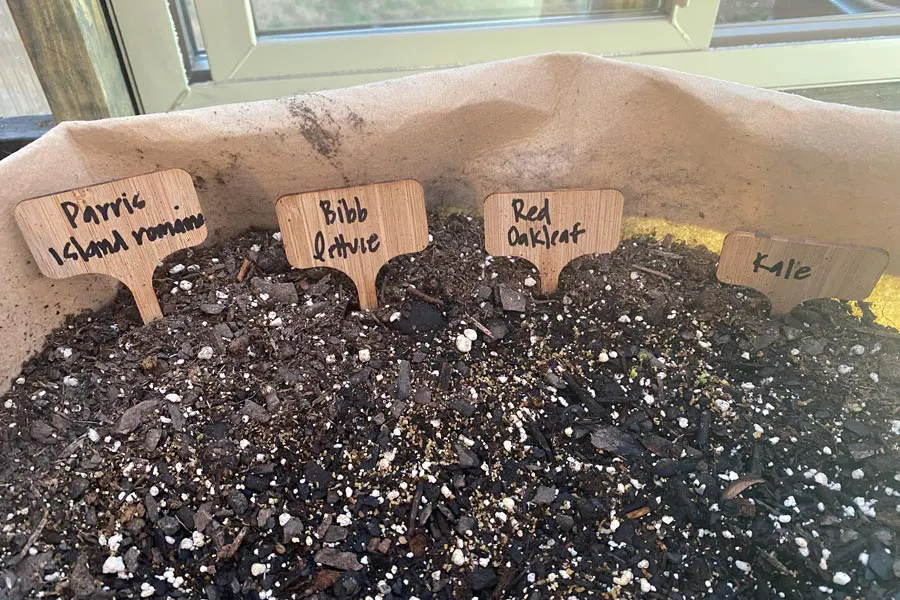
- Salanova and other leaf lettuces
- Spinach
- Kale
- Arugula
- Swiss chard
- Broccoli
- Carrots
- Parsley
- Sugar snap peas
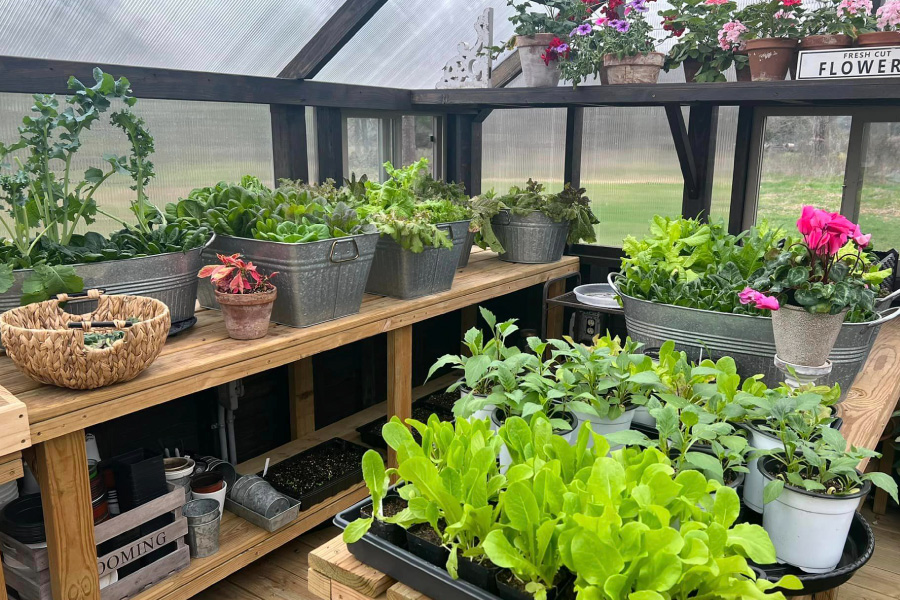
Imagine walking into your greenhouse on a cold January morning and harvesting fresh lettuce, spinach, and herbs for dinner that evening. That’s one of the wonderful advantages of growing your own food in a greenhouse.

For a greenhouse dedicated primarily to cool-season crops, daytime temperatures around 50–70°F can be appropriate, depending on the plants.
Nighttime temperatures may be considerably lower.
Some established, acclimated cold-hardy crops tolerate brief periods near or below freezing, although others may suffer damage. Young seedlings, tender growth, and exposed roots generally need additional protection. I personally can allow my greenhouse to fall into the mid to upper 30s before I even provide supplemental heat due to the plants I grow every fall through spring. However, if you grow tropicals and more heat-loving plants, you would need to keep your greenhouse warmer per those specific plant recommendations.
And remember, just because a plant can tolerate cold temperatures doesn’t mean it will grow quickly in them.
Why Winter Daylight Matters Just as Much as Temperature
Here’s something many beginning greenhouse gardeners don’t realize.
You can have the right greenhouse temperature and still experience very slow plant growth during winter.
Why?
Because sunlight matters just as much as temperature.
During late fall and winter, shorter days and lower sun angles reduce the amount of light plants receive.
You may notice that lettuce growing quickly in September takes considerably longer to reach harvestable size in December or January.
That’s completely normal.
This is one reason experienced winter gardeners often start their cool-season crops well before the shortest days of the year.
The goal is to enter winter with healthy, established plants that can continue providing harvests, even when growth slows.
A greenhouse gives you another growing season, but understanding that season helps you make the most of it.
Heating Your Greenhouse Resource
How Cold Is Too Cold for a Greenhouse?
This is an especially important question for anyone planning to grow through winter.
The first thing to understand is that a greenhouse itself doesn’t have one universal minimum temperature.
The real question is how cold the plants inside your greenhouse can safely tolerate.
Different plants respond very differently to cold.
Cold-hardy vegetables: Established spinach, kale, and certain lettuce varieties may withstand brief freezing conditions, depending on the variety, acclimation, and protection.
Tender vegetables: Tomatoes, peppers, and basil are much more sensitive to cold. Even temperatures well above freezing can slow growth or cause chilling stress. I typically keep these on heat mats on the colder days and nights.
Tropical plants: Many tropical plants require considerably warmer conditions, particularly overnight.
Here’s another helpful greenhouse gardening tip: The temperature of your soil can be a little different from the air temperature inside your greenhouse. Soil and growing containers naturally warm and cool at different rates throughout the day. This is completely normal!
Keeping an eye on your greenhouse temperature, along with the growing conditions around your plants, can help you make simple adjustments as the seasons change.
Do Greenhouses Stay Warm at Night?
A greenhouse captures solar energy during the day, but it doesn’t generate its own heat after sunset. As outdoor temperatures fall, heat escapes through the greenhouse covering and other parts of the structure. Without supplemental heating or sufficient stored heat, an unheated greenhouse can eventually approach outdoor temperatures.
How quickly that happens depends on several factors, including construction, insulation, wind, weather conditions, and the amount of heat stored inside.
This is especially important for gardeners who are new to greenhouse ownership.
A sunny winter afternoon can create surprisingly warm conditions inside your greenhouse, but that warmth doesn’t necessarily last through a freezing night. For gardeners planning to grow throughout winter, a reliable thermometer and a heating strategy appropriate for their crops are important.
How Hot Is Too Hot for a Greenhouse?
When people think about greenhouse temperature control, winter heating often comes to mind first.
But excessive heat can be just as challenging.
Here’s something I want every greenhouse gardener to understand: A hot greenhouse doesn’t necessarily mean you have to stop growing!
Greenhouses naturally warm up when the sun is shining, and during the summer months, temperatures can climb well beyond the ideal growing ranges listed in our chart. While prolonged high temperatures can stress certain plants and affect flowering or fruit production, that doesn’t mean successful summer greenhouse gardening is out of the question.
Let me share a little of my own experience.
I garden in Arkansas, in growing Zone 7b, where our summers are HOT. And I mean hot! Temperatures inside my greenhouse can climb well into the triple digits, sometimes for days at a time.
But here’s the thing: I successfully grow in my greenhouse all summer long.
Am I growing carrots in July? Absolutely not! That’s simply not a practical crop for those conditions.
But tomatoes? Yes! Peppers? Absolutely. Okra, onions, certain flowering plants, and plenty of other things? You bet.
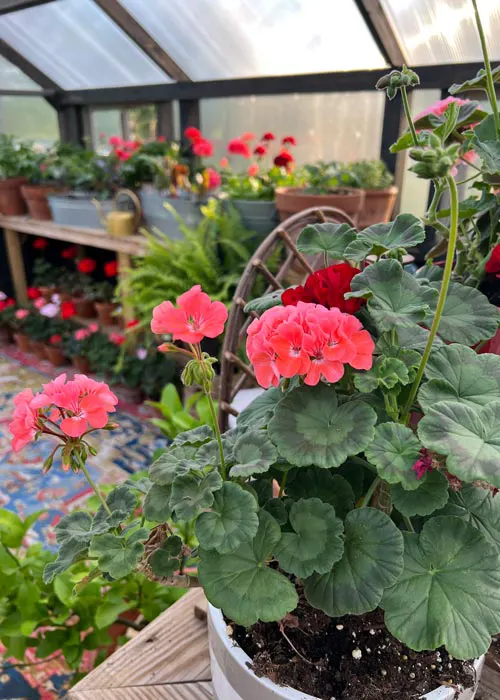
My tomatoes flower and produce fruit. My okra blooms and keeps producing. And believe it or not, my geraniums often look better inside my greenhouse than they do sitting on my patio!
So what’s my secret?
It’s not one magical product or a perfectly controlled temperature. It’s a combination of a few things that I’ve learned make a tremendous difference:
- 70% Aluminet shade cloth: This is one of my favorite tools for managing our intense Arkansas summer sun. It helps reduce solar heat gain while still allowing light into the greenhouse.
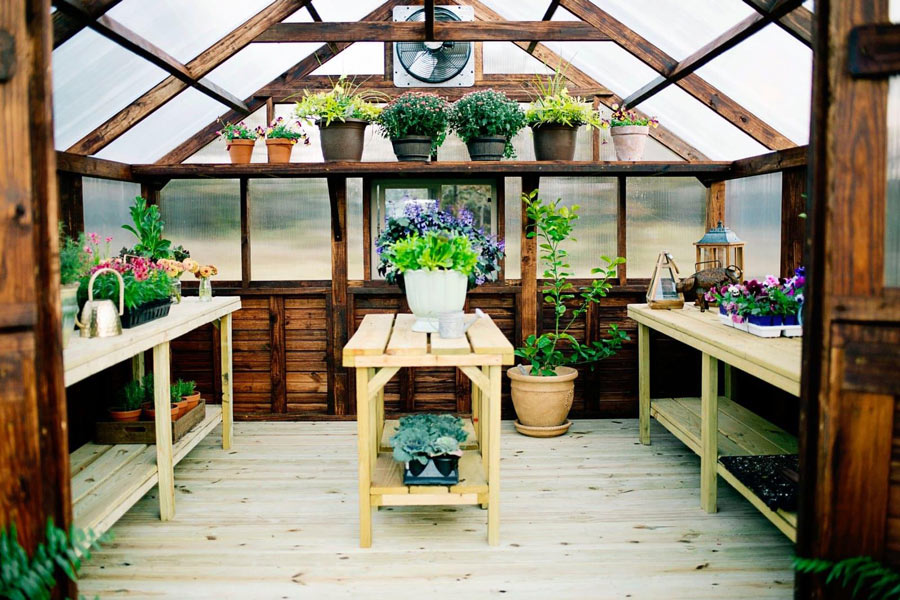
- As much ventilation as possible: I want that hot air to have somewhere to go. Open windows, vents, and good airflow are incredibly important.
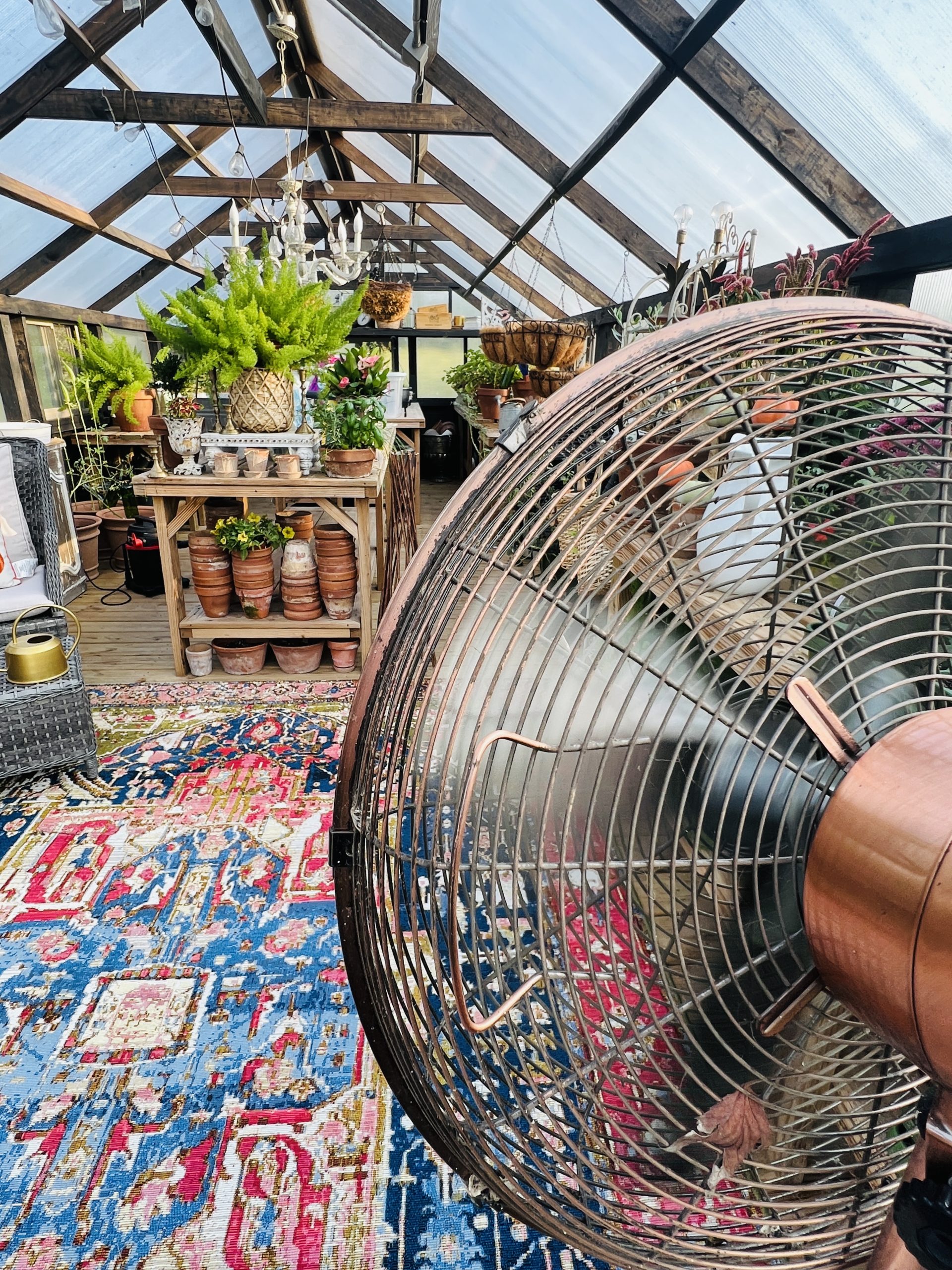
- Fans to keep the air moving: Air circulation helps reduce stagnant conditions and supports healthier plants.
- Diligent watering: And I do mean diligent! During our hottest months, I pay close attention to moisture levels and adjust watering to what my plants actually need. I will often water twice a day.
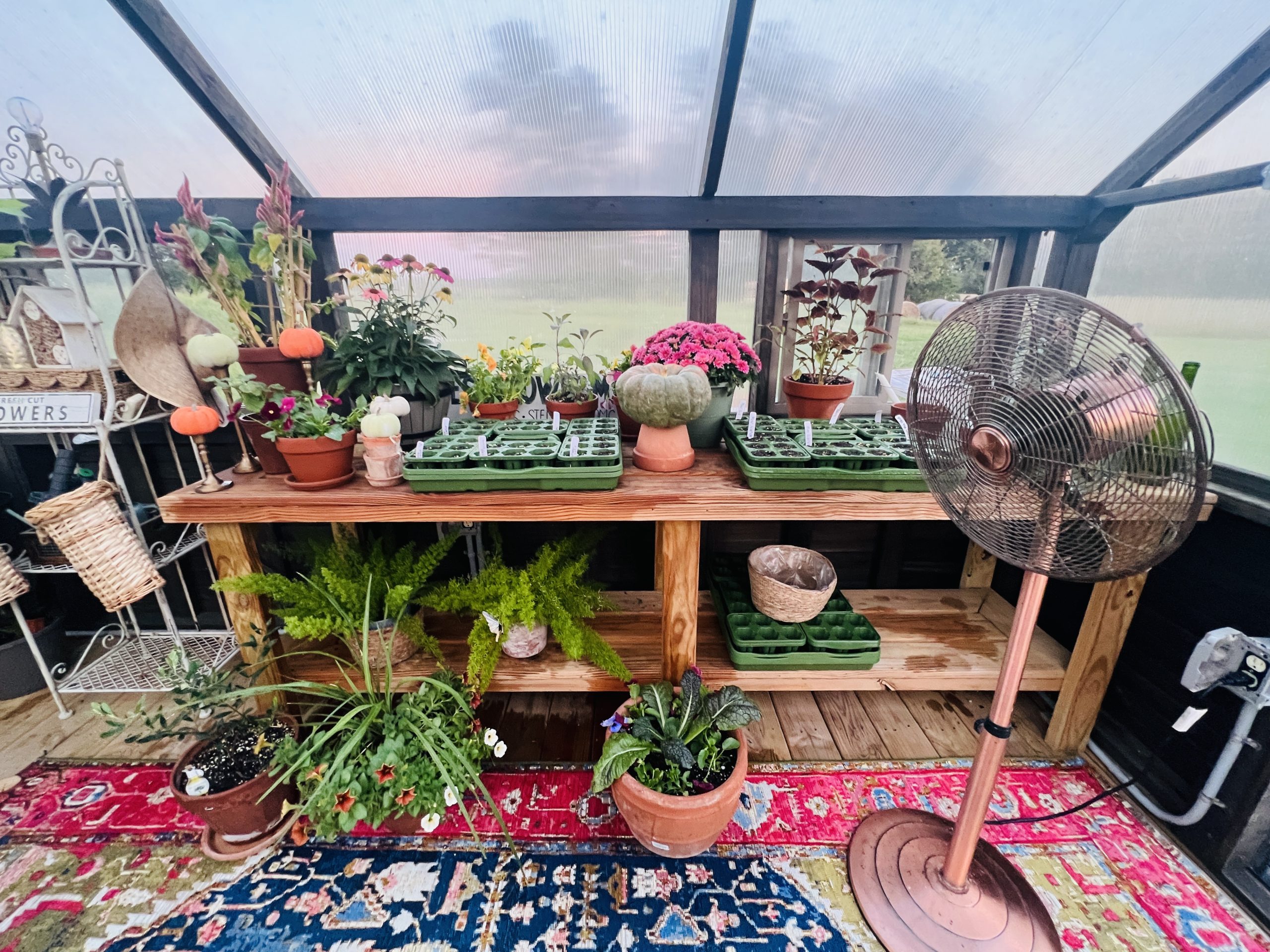
Now, does that mean every plant will thrive in triple-digit temperatures? Of course not. Even heat-loving crops can experience stress, and extremely high temperatures can interfere with pollination and fruit production. Choosing appropriate varieties, providing shade, and managing moisture are all important.
But I don’t want anyone to think that a greenhouse is only useful during spring, fall, and winter.
I use mine all summer long, and I love it.
And there’s another bonus that I particularly appreciate: My greenhouse protects my plants from the deer that are determined to demolish my outdoor garden every single year!
The takeaway? Don’t let summer temperatures discourage you from greenhouse gardening. Learn what grows well in your climate, make use of shade and ventilation, stay on top of watering, and be willing to adjust what you’re growing with the seasons.
A greenhouse doesn’t have to maintain a perfect 75°F to be a wonderfully productive growing space.
What Happens When a Greenhouse Gets Too Hot?
Excessive greenhouse heat may lead to:
- Wilting and increased water demand
- Reduced flower production or fruit set
- Blossom drop on tomatoes and peppers
- Lettuce bolting and developing bitter flavors
- Slower growth in cool-season vegetables
- Heat stress and leaf damage
Tomatoes are a good example.
They love warmth, but excessively high temperatures can interfere with pollination and fruit development. Although I was harvesting tomatoes in my greenhouse this past August and September when we were breaking temperature records daily.
Meanwhile, lettuce generally prefers a much cooler environment.
This is why greenhouse ventilation isn’t simply a convenience. It’s an important part of maintaining healthy growing conditions.
How to Keep a Greenhouse Cool in Summer
A successful greenhouse isn’t simply about trapping warmth.
It’s about managing the growing environment throughout the year.
At Yoderbilt Greenhouses, we offer several features that can help gardeners manage greenhouse temperatures and airflow.
1. Automatic Vent Openers
Automatic vent openers help regulate ventilation by opening and closing compatible vents as temperatures change.
They’re especially helpful when the sun comes out unexpectedly and your greenhouse begins warming.
Rather than relying entirely on someone being home to open a window, properly adjusted automatic vents provide an additional level of convenience.
They’re a popular option for greenhouse owners who want to make temperature management a little easier.
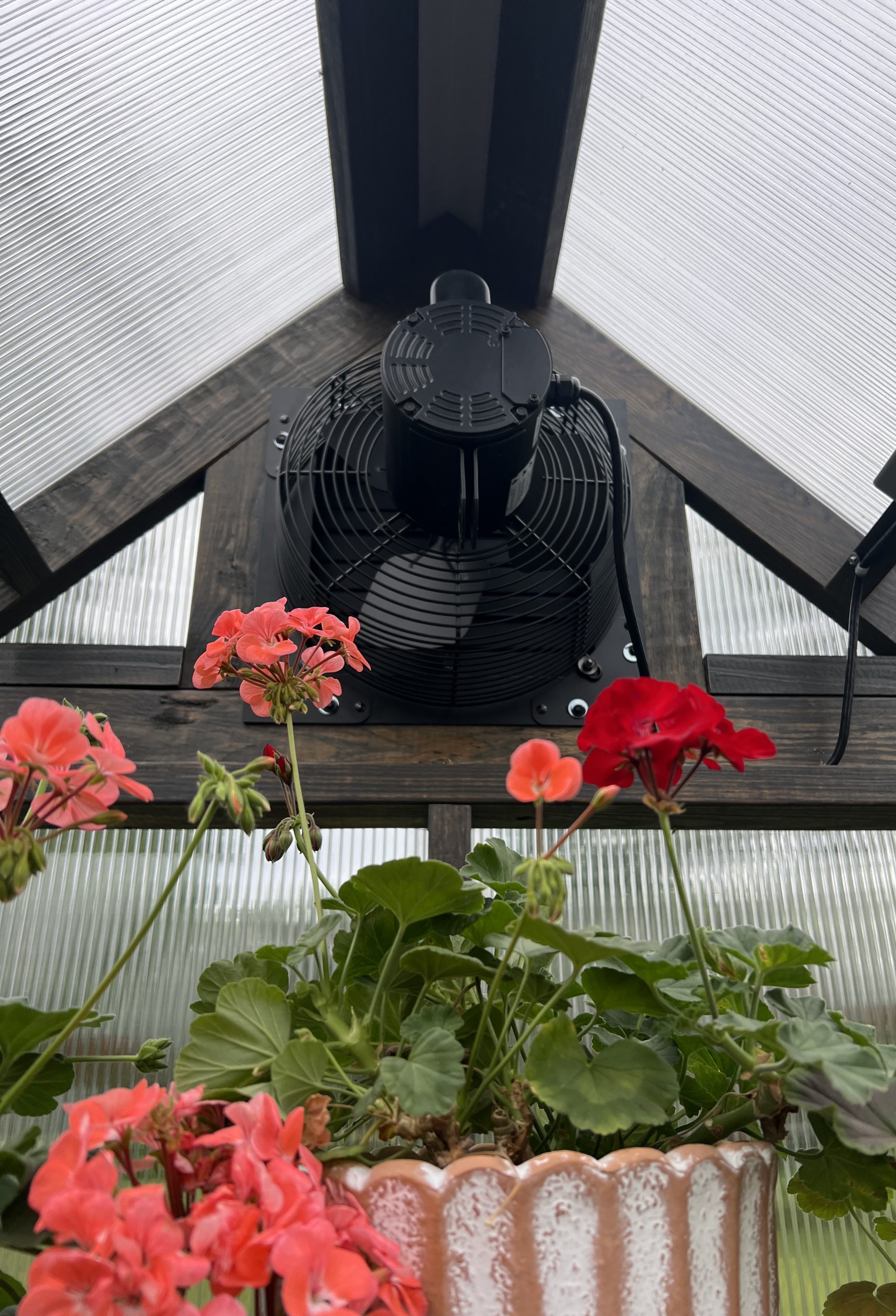
2. Exhaust Fans
An exhaust fan helps remove hot air from the greenhouse.
When paired with appropriate intake openings, it encourages airflow and helps replace hot interior air with outside air.
Proper ventilation can help reduce heat buildup, although its effectiveness depends on fan capacity, greenhouse size, intake area, and outdoor conditions.
It’s also important to remember that ventilation alone generally cannot cool a greenhouse below the temperature of the incoming outdoor air.
3. Additional Windows
Windows provide another opportunity to increase natural airflow.
Depending on your greenhouse layout, additional ventilation openings can help improve air movement throughout the growing space.
This is particularly useful during spring and fall, when temperatures may fluctuate significantly throughout the day.
Monitor Temperatures at Plant Level
Here’s a simple tip that can make a big difference.
The temperature near your greenhouse roof may be considerably different from the temperature around your growing beds. Place a thermometer where your plants are actually growing, away from direct sunlight that could distort the reading.
A minimum/maximum thermometer or remote temperature monitor can help you identify temperature changes throughout the day and night. Some remote monitoring systems also allow you to check conditions from your phone and receive alerts when temperatures move outside a selected range.
That can be especially helpful during unexpected weather changes or when you’re away from home.
Greenhouse Temperature for Tomatoes and Peppers
Tomatoes and peppers are among the most popular greenhouse crops. They’re also a good example of why one greenhouse temperature doesn’t work for everything. Both prefer warmer conditions than many of the leafy greens we grow during winter.
Tomatoes
Tomatoes generally perform well with daytime temperatures around 70–80°F and nighttime temperatures around 60–70°F.
They also need adequate sunlight, airflow, and consistent moisture.
Temperatures that are too cold can slow growth, while excessive heat can interfere with pollination and fruit development.
A greenhouse can help extend the tomato-growing season, but maintaining productive tomato plants throughout winter may require supplemental heating, a heat pad and, in some climates, additional lighting.
Bell Peppers
Peppers also prefer warm growing conditions.
Daytime temperatures around 70–80°F and nighttime temperatures around 60–65°F are useful targets for many varieties.
Peppers can be particularly slow to establish in cool soil. If you’re starting pepper seeds, pay attention to the temperature of the growing medium, not just the air inside your greenhouse. A thermostatically controlled seed-starting heat mat may help provide the consistent warmth needed for reliable germination.
Greenhouse Temperature for Lettuce, Spinach, and Other Leafy Greens
If you’ve never grown fresh greens in a greenhouse during the cooler months, you’re missing one of our favorite advantages of greenhouse gardening. There’s something wonderful about harvesting lettuce for dinner while the outdoor garden is resting. And unlike tomatoes and peppers, leafy greens generally don’t need summer-like temperatures to thrive.
Lettuce
Many lettuce varieties grow well in daytime temperatures around 55–70°F. Cooler temperatures can help maintain leaf quality and delay bolting.
When temperatures become consistently high, lettuce may develop bitter flavors or begin producing a flower stalk. For gardeners interested in a productive winter greenhouse kitchen garden, lettuce is an excellent place to start.
Spinach
Spinach is especially well suited to cool conditions. It generally prefers temperatures around 50–65°F during the day, and established plants can tolerate considerably colder conditions.
Spinach is a wonderful crop for winter greenhouse gardening, particularly when planted early enough to become established before the shortest days of the year.
Kale
Kale is another excellent cool-season vegetable. Many varieties tolerate cold weather exceptionally well once established. With appropriate growing conditions, kale can continue providing harvests over an extended period.
It’s also a versatile crop to have available for soups, salads, and other meals throughout the cooler months.
Swiss Chard
Swiss chard is a productive and beautiful addition to the greenhouse kitchen garden. It tolerates a fairly broad temperature range, although moderate conditions are generally best for steady growth. And with its colorful stems and attractive leaves, it’s just as beautiful as it is useful.
For gardeners who enjoy growing both ornamental and edible plants, Swiss chard offers a little of both.
What Temperature Should a Greenhouse Be for Starting Seeds?
Seed starting introduces another important distinction.
The temperature a seed needs to germinate may be different from the temperature the young plant needs after it sprouts.
For example, peppers often germinate best in much warmer growing media than lettuce. Many warm-season seeds benefit from soil temperatures around 75–85°F, while cool-season seeds may germinate successfully at lower temperatures. Once seedlings emerge, adequate light becomes especially important.
Too much warmth combined with insufficient light can encourage weak, stretched growth. For many gardeners, seed starting is one of the most rewarding ways to use a greenhouse. You can grow varieties that may not be available at local garden centers, plan your planting schedule, and get a head start on the outdoor growing season.
And there’s something especially satisfying about watching those first tiny seedlings emerge when it’s still cold outside.
Can You Grow Warm-Season and Cool-Season Plants in the Same Greenhouse?
Absolutely!
But it’s important to understand that their ideal growing conditions may be different. For example, you might have spinach and lettuce growing alongside peppers you’re overwintering. The leafy greens may prefer cooler conditions, while the peppers need more warmth to remain actively productive.
One approach is to create different growing zones within your greenhouse. You can position cold-tolerant plants in cooler areas and place temperature-sensitive plants in locations where they receive more protection.
Sometimes the simplest solution is to grow with the season.
Give cool-weather crops priority during winter and transition toward warm-season crops as temperatures and daylight increase.
You don’t have to grow everything at once to have an incredibly productive greenhouse.
Does Greenhouse Construction Affect Temperature?
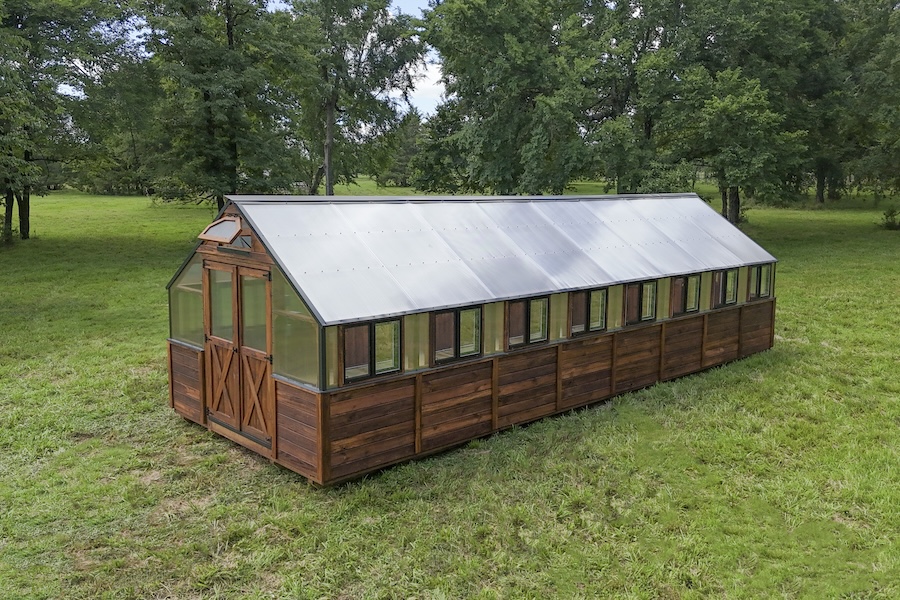
Absolutely, and it’s an important consideration when choosing a greenhouse. The materials used in a greenhouse influence how heat moves in and out of the structure. Yoderbilt Greenhouses feature 8mm twin-wall polycarbonate panels.
The air space within twin-wall polycarbonate helps reduce heat transfer compared with many single-layer greenhouse coverings. Our greenhouses are also built with Southern Yellow Pine framing and include a built-in pressure-treated deck-board floor.
For gardeners planning to grow during colder months, insulated lower walls are available as an option. And for warmer weather, available features such as automatic vent openers, additional windows, and exhaust fans can help manage ventilation.
Of course, no greenhouse material or accessory eliminates the need to monitor temperatures. A greenhouse is a growing environment that changes with the weather, the season, and the plants inside it.
But thoughtful construction and appropriate ventilation options can make it easier to create growing conditions suited to your needs.
The Best Greenhouse Temperature Is the One That Works for What You’re Growing
One of the greatest lessons greenhouse gardening teaches us is that we don’t have to grow everything at the same time.
We can grow lettuce, spinach, kale, and other cool-season vegetables when the weather turns cold.
We can start seeds earlier, extend our harvests, and protect plants that would otherwise struggle outdoors.
And as the seasons change, we can shift our attention toward tomatoes, peppers, cucumbers, herbs, and flowers.
The goal isn’t to maintain one perfect temperature every day of the year.
It’s to understand what your plants need and create the best possible growing conditions for them.
And sometimes that means learning through a little trial and error. That’s part of gardening, too.
The more you understand your greenhouse environment, the more confidently you can plan your growing seasons, choose your crops, and enjoy the harvests that come from them.
Ready to Grow More of What You Love?
Imagine stepping outside on a chilly winter morning and harvesting fresh greens for lunch.
Or getting a head start on spring while the outdoor garden is still waiting for warmer weather.
Imagine having a dedicated growing space where you can nurture your favorite plants, experiment with new varieties, and enjoy more of what you grow throughout the year.
At Yoderbilt Greenhouses, we make that dream a little easier.
Our fully assembled greenhouses are available in sizes from 8×8 to 12×32, with a variety of options to help you plan a greenhouse around your growing goals.
And because your greenhouse arrives fully assembled, there’s no complicated kit to put together before you can begin making it your own.
Your next growing season doesn’t have to wait for the calendar.
Or call us at 479-849-4385 to discuss available sizes, features, and delivery options.
Yoderbilt Greenhouses — As Seen on HGTV. Winner of the Backyard Rock the Block Episode.
Frequently Asked Questions About Greenhouse Temperatures
What is the ideal temperature for a greenhouse?
For many common greenhouse plants, daytime temperatures of approximately 65–80°F are a useful general starting point. However, cool-season crops often prefer lower temperatures, while warm-season vegetables need more warmth. The ideal temperature depends on what you’re growing.
What temperature should I keep my greenhouse in winter?
For cold-hardy vegetables, relatively cool temperatures may be appropriate. Some established crops tolerate brief periods near freezing, while tender plants require considerably warmer conditions. Choose your winter greenhouse temperature based on the least cold-tolerant plants you’re growing.
Is 40°F too cold for a greenhouse?
Not necessarily. Some established cold-hardy vegetables, including spinach and kale, can tolerate 40°F or lower. However, 40°F is too cold for optimal growth of many warm-season vegetables and tropical plants.
Is 90°F too hot for a greenhouse?
For many plants, prolonged exposure to 90°F can cause stress, particularly when ventilation and water are inadequate. Cool-season crops are especially vulnerable, and high temperatures can interfere with fruit production in tomatoes and certain other vegetables.
What temperature should a greenhouse be at night?
Nighttime temperatures depend on the crop. Cool-season vegetables often tolerate temperatures around 40–55°F, while tomatoes, peppers, and other warm-season crops generally perform better with nighttime temperatures around 60–70°F.
Do greenhouses stay warmer than outside at night?
They can, especially when heat is stored or supplemental heating is provided. However, an unheated greenhouse can approach outdoor temperatures overnight, particularly during prolonged cold weather. Greenhouse construction, insulation, wind, and weather conditions all influence nighttime temperatures.
Should I leave my greenhouse vents open at night?
That depends on the weather, humidity, and plants being grown. Ventilation can help control excess moisture, but leaving vents open during cold weather may cause unwanted heat loss. Temperature monitoring and properly adjusted ventilation systems can help you make better decisions.
Can I grow vegetables year-round in a greenhouse?
In many climates, a greenhouse can support vegetable growing across much of the year, and year-round harvests are possible with suitable crop choices and environmental management. Heating, cooling, supplemental lighting, and thoughtful planting schedules may be necessary depending on your location and the crops you want to grow.